Farm tech is not a single purchase decision, whatever the pitch decks imply. A farm manager weighing it up is really choosing among several different bets: better human extension, a digital record-keeping app, field sensors, or hardware that replaces labour outright. Each has a different cost, a different evidence base, and a different failure mode. Over 70 percent of Kenya's population depends on agriculture, according to the Innovation Agency's review of Kenyan smallholder tech, which is exactly why so many pilots are chasing this market at once. The job here is not to pick a winner. It is to match the bet to the farm.
Measured by NuaSense weather stations and soil probes on Kenyan farms, over the period stated with each figure. Past readings, not a forecast.
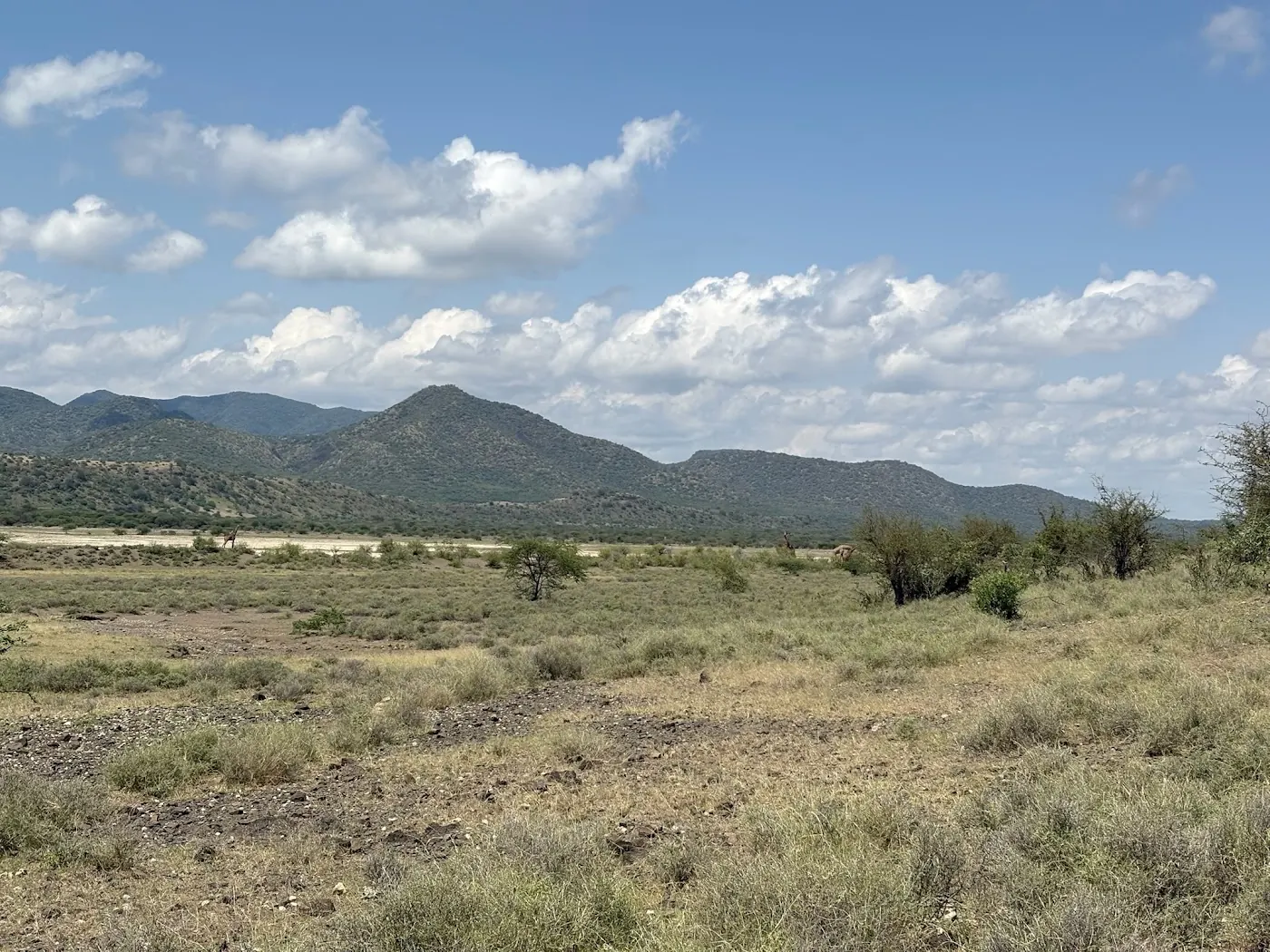
The four bets on the table
Farmer-to-farmer extension puts a trained lead farmer among peers, at low direct cost but real social cost if it is set up wrong. Digital advisory platforms and apps, the Zalisha and Shamba Salama kind, sit on a smartphone and depend on connectivity and trust. Field sensors and weather stations report what is happening on the ground continuously, without asking anyone to remember to log it. Automation, robotic milking being the clearest example, replaces a physical task entirely.
These are not stages of a ladder that every farm climbs in order. A flower farm running a weather station gains nothing from a farmer-to-farmer model built for smallholder maize blocks in western Kenya. A five-cow smallholding has no use case for a milking robot. The mistake worth avoiding is treating farm tech as one upgrade path, app then sensor then robot, when the four bets solve different problems for different farm sizes.
The World Bank's AgriConnect initiative, described at its 2025 annual meetings event, aims to double agribusiness commitments to 9 billion dollars a year by 2030 and mobilise a further 5 billion from partners, with a Bayer memorandum waiving IP rights for nitrogen-fixing wheat trials in Africa. That is capital moving toward inputs and breeding, not sensor networks specifically, and it tells you where the big money is actually pointed: seed and soil biology, not gadgets.
Human extension: cheap per farmer, expensive to get right
Farmer-to-farmer extension looks like the cheapest option on paper. No hardware, no subscription, just a trained lead farmer sharing what they know with neighbours. Kenya already runs two versions of this in the west of the country, Volunteer Farmer Trainers and Village-Based Advisors, documented in ILRI's study of farmer-to-farmer extension in western Kenya. The study covered Oyugis, Rongo, Vihiga, Homa Bay and Siaya, and it found something that should temper any assumption that training one farmer automatically spreads knowledge outward.
Training a lead farmer does not reliably work if the surrounding social capital is low. If a lead farmer is not trusted or well connected within the group, the knowledge does not travel. ILRI's recommendation was to build bonding social capital, particularly among women, before rolling out training, because the study also found that people with high bonding social capital in these communities tend to be men. That is not a small footnote. The cheapest tech bet on this list has a hidden cost in group cohesion work that has to happen first, and skipping it is why some farmer-to-farmer programmes underperform.
The FAO's extension manual makes a related point that cuts against the old top-down model: extension services need to be proactive and participatory, acting as knowledge brokers rather than instructors, according to the FAO agricultural extension manual for extension workers. Put together, the two sources say the same thing from different angles. Extension is not obsolete, and it is not a solved problem either. It works when the social structure underneath it is strong, and fails quietly when it is not.
Digital advisory apps: promising, and still early
Kenya has several digital platforms running pilots right now, and it is worth being precise about their scale rather than rounding up. Zalisha works with more than 60 farmer cooperatives representing over 300,000 farmers, per the Innovation Agency's review. Shamba Salama, an AI chatbot piloted in Migori County, onboarded 54 farmers and held 80 percent retention during that pilot. Market Farm, which runs solar-powered cold storage in Laikipia, Nyandarua and Kiambu, has over 100 farmers using it with 70 to 75 percent retention, generated its first million shillings in the pilot phase, and projects over 7 million by year end, with plans to expand into Meru and Nakuru.
Those are pilot numbers, not nationwide reach, and it would misrepresent the source to say otherwise. Retention above 70 percent in a paid or habitual-use service is still a real signal, because farmers who see no value drop tools fast. The Market Farm case is instructive for post-harvest loss specifically, because cold storage solves a problem no app or sensor solves alone: perishability between harvest and market.
The catch with digital platforms generally is the same one that shows up in Brazil's experience, discussed below: they assume a smartphone, connectivity and comfort navigating an app. Where those line up, adoption can move fast. Where they do not, the platform sits unused no matter how good the underlying model is. A manager evaluating one of these tools should ask the vendor for a retention figure from an existing customer base, not a projection.
What Brazil's family farms show about the automation gap
Brazil is not Kenya, but its family-farm sector is closer in structure to much of Kenyan agriculture than the large commercial farms usually cited in ag-tech coverage. In Brazil, 87 percent of farms are small and family-run, producing 40 percent of agricultural GDP on 32 percent of cultivated land, according to the World Bank's account of Brazilian family farms going high tech. That report follows the Meyer family in Anitapolis, Santa Catarina, who now milk 40 cows in 20 minutes with automated equipment that replaced hand milking, a switch driven partly by the father's back problems and partly by training. Milk production in that municipality has more than tripled over the past decade, credited in part to technology adoption.
The same report is candid about a generational split. Osni and Zenaide, the older generation on a different farm, did not use the internet and relied on extension agents. Their son Cleyton used WhatsApp instead. The report states plainly that precision agriculture technologies are designed for medium to large-scale farmers, not smallholders, and that Plano ABC, Brazil's largest Climate Smart Agriculture programme, is not reaching smaller farmers.
The transfer to Kenya is not that dairy farms here should expect robotic milkers. Few will justify the capital outlay at Kenyan herd sizes. The transfer is the pattern: precision tools built for medium-to-large operations do not fit smallholder economics anywhere, and a vendor pitching Kenyan smallholders with a system designed for a different scale of farm is repeating Brazil's mismatch, not solving it. Bauer Aerosystems, a Brazilian drone startup in the same report, delivers pesticides and fertiliser where tractors cannot go, a genuinely useful niche, but again one built around a specific terrain problem, not a general answer for smaller plots.
Sensors and weather stations: what they add that apps do not
Field sensors solve a different problem: they remove the requirement that a human remember to observe and record something. A World Bank digital farm project installed weather stations in Sireet, Kenya and Bushenyi, Uganda, capturing weather data at the individual farmer level for the first time in that setting. The project trained 4,126 smallholders directly across Kenya, Uganda and Tanzania in 2019, indirectly reaching 16,504 more, alongside a digital record-keeping app. After training, only 394 people were still actively using the FarmDirect app or logbooks. That drop, from over 4,000 trained to 394 still logging, is the single most sobering number in this comparison: installing hardware and running a training session is the easy part, sustained use is the hard part.
Continuous sensing has an advantage that training-dependent tools do not: it keeps reporting whether or not a person opens an app that day. A weather station computes hourly reference evapotranspiration, dew point, vapour pressure deficit, leaf wetness duration and a spray window score from its own readings, all derived values rather than extra hardware. Across our own network of weather stations in Kenya, air temperature over the past month ranged from 3.9 to 31.3 degrees Celsius with a mean of 17.0, and relative humidity averaged 75 percent, ranging from 22 to 100. Reference evapotranspiration averaged 1.6 millimetres a day. None of that requires a farmer to remember to check anything; it accumulates regardless of how busy the season gets.
Soil probes work the same way at the root zone: relative moisture, expressed as percent of sensor scale rather than calibrated volumetric water content, averaged 60 percent across our deployed probes over the past month, with most readings between 18 and 92 percent. Soil temperature at the two probe depths behaves differently across a season, with the steadier depth moving through a smaller range than the more variable one, a pattern discussed further in our guide to irrigation optimisation. What a sensor gives you that an app cannot is a record that exists independent of who is trained and who stays engaged.
What the numbers say about spray timing and disease pressure
One place sensor data changes a real Monday-morning decision is spray timing, and it is worth being honest about how narrow the good windows are. Across four of our weather stations over a four-week period, only 15 percent of station-hours scored 60 or better on a 0 to 100 spray quality index, while 59 percent scored below 30. Leaf wetness, a driver of fungal disease pressure, was recorded for 40 percent of station-hours across the same stations, roughly 9.6 hours in an average day. Vapour pressure deficit averaged 0.57 kilopascals but peaked at 2.96, a spread wide enough that a decision made on yesterday's conditions can miss today's window entirely.
None of this is a forecast. It is a record of what already happened, and the value is catching a farm's actual microclimate rather than assuming county-average conditions apply. Rainfall totals over a three-week window ranged from 0.0 to 157.6 millimetres across eight of our stations, a spread wide enough that two farms a short drive apart can be having entirely different seasons. Against that, the long-term CHIRPS satellite rainfall record for the grid cells our stations sit in averages 54 millimetres for August across 43 years, ranging from a driest year of 26 millimetres in 1986 to a wettest of 83 in 2025. The gap between one season's live station reading and a four-decade average is the whole argument for measuring locally rather than trusting a regional climate normal.
The practical takeaway for a spray programme is that low-quality windows dominate more than growers tend to assume, and a station that flags the better 15 percent of hours, rather than leaving a manager to guess from the sky, is doing something an app-only advisory service cannot replicate without hardware behind it.
Automation was built for farms that cannot find workers
The University of Wisconsin's 2025 series on farm technology frames automation, robotic milking being the flagship case, around labour shortages driven by immigration policy, an aging rural workforce and difficult working conditions. The first commercial milking robots reached Europe in 1992, with GPS and personal computers arriving on farms in the 1980s and 90s. That is a labour story specific to markets where rural labour is scarce and expensive, which is not the labour picture on most Kenyan farms today.
That does not mean automation has no place here. It means the case for it, where one exists, will be built on a different argument: not labour scarcity, but tasks that are physically punishing or that a smaller workforce genuinely cannot cover across a large operation, the way back problems pushed the Meyer family in Brazil toward automated milking. Buying a robot because a Wisconsin extension article says labour is short elsewhere is importing the wrong justification. A manager considering automation should be able to name the specific task and the specific constraint it solves, not gesture at trends from another continent.
Who should own the decision, according to CGIAR
A CGIAR study on resilience in farm technical efficiency makes a point that cuts against a purely hardware-first view of adoption: providing public goods, meaning training and decision-making autonomy, is critical to whether a technology gets adopted and used well. That lines up with the World Bank digital farm project's drop from thousands trained to 394 still logging, and with ILRI's finding on social capital. The common thread across three unrelated studies is that the technology itself is rarely the constraint. Ownership of the decision, and trust in whoever delivers the training, are.
For a farm manager, this argues for treating any tech purchase, sensor, app or otherwise, as a training and change-management project first and a hardware purchase second. Budget for follow-up visits, not just installation. Identify who on the farm will actually own the daily habit of checking a dashboard or logging an observation, and give that person some say in how the tool gets used, rather than handing them a system designed elsewhere. Our guide to smart farming trends in Kenya covers how mobile advisory platforms and precision tools are being adopted unevenly across the country, and the unevenness tracks closely with exactly this ownership question.
Why unreplicated trials mislead farm managers
Before adopting any new practice off the back of a demonstration plot, whether a new variety, a sensor-driven irrigation schedule or a soil amendment, it is worth knowing how weak most demonstration evidence actually is. The University of Florida's IFAS guidance on planning on-farm field trials recommends a randomised complete block design with four blocks, replicated across at least four locations, before drawing any conclusion. Unreplicated demonstration plots, however large, produce biased and weak conclusions, and a bigger plot does not fix the lack of replication. A single strip trial on one field proves nothing reliable, no matter how convincing the difference looks.
This matters for farm tech decisions because vendors routinely show a single before-and-after comparison from one farm as proof of value, exactly the unreplicated demonstration IFAS warns against. The same guidance notes that conservation agriculture practices may take several cropping seasons before results show up, so judging a new sensor-driven schedule against one season's yield is likely to draw the wrong conclusion in either direction.
The honest position for a Kenyan grower is that no comprehensive, replicated Kenyan trial table exists comparing these farm tech options head to head on yield or income. That gap should be named rather than papered over with a vendor's single-farm case study. Until such a table exists, the safer approach is small, deliberately replicated trials on a manager's own block, one part running the new practice and an equivalent part running the old one, for at least two seasons, before scaling a decision farm-wide.
A practical decision framework
Given the four bets, an honest ranking depends on the farm's own constraints, not on which technology is newest. A smallholder group with weak internal trust needs the social capital work ILRI describes before any app or lead-farmer scheme will spread. A farm with reasonable connectivity and a genuine post-harvest loss problem is the clearest fit for something like the Market Farm cold storage model, because it solves a physical bottleneck an app cannot touch. A farm managing irrigation or spray timing across variable microclimates benefits most from continuous field sensing, a pattern discussed further in our piece on raising crop yields in Kenya, which covers the water and soil constraints that most limit yield gains. A large operation with a specific, physically demanding task and enough scale to justify the capital cost is the only realistic candidate for automation in the near term.
What should not happen is buying the tool with the best pitch deck and hoping adoption follows. The evidence across every source used here, Brazil, western Kenya, the World Bank's own pilot, CGIAR's resilience study, converges on the same conclusion: adoption fails or succeeds on training, trust and ownership far more than on the specifications of the hardware itself. A manager who budgets for the human side of a rollout, and insists on replicated evidence rather than a single glowing case study, will get more out of any of these four bets than one who buys first and figures out adoption later.
Comparison: the four bets, side by side
- Farmer-to-farmer extension: low direct cost, but ILRI's western Kenya study found it fails where bonding social capital is weak, especially for women. Needs group cohesion work before rollout. Best fit: smallholder groups with an existing trusted network.
- Digital advisory apps: subscription or freemium cost, evidence is pilot-scale (Zalisha's 300,000-plus farmer cooperative reach, Shamba Salama's 80 percent pilot retention). Needs smartphone access and sustained engagement; the World Bank digital farm project saw usage fall from over 4,000 trained to 394 active. Best fit: farms and cooperatives with reliable connectivity and a designated app owner.
- Field sensors and weather stations: upfront hardware and data service cost, produces continuous records (evapotranspiration, leaf wetness, soil moisture and temperature) independent of human logging. No Kenyan comparative yield study exists yet. Best fit: irrigation- and spray-timing decisions on farms where microclimate varies block to block.
- Automation (robotic milking, drones): highest capital cost, justified in Brazil and Europe by labour scarcity or physical strain, not yet a common Kenyan labour picture. Bauer Aerosystems' drones solve a specific terrain-access problem in Brazil. Best fit: large operations with a named physical task and the scale to amortise the cost.
What a sensor buys a manager, and what it cannot replace
It is worth being direct about what field sensors do and do not solve, since this site sells them. A soil probe or weather station reports what happened, continuously and without needing anyone to remember to look. It does not train anyone, it does not build social capital in a farmer group, and it does not forecast the season ahead: it reports a stated past period from the instruments themselves, nothing more. Anyone selling a sensor as a substitute for the training and ownership work described by CGIAR and ILRI is overselling it. What a sensor genuinely buys a manager is a record that survives staff turnover, survives a busy month when nobody has time to walk the field, and gives a spray or irrigation decision something firmer to stand on than memory of last week's weather. That is a real, specific benefit. It is also not the whole answer, and no single one of the four bets here is.
For a manager weighing this up, the honest next step is small and reversible: pick one block, one season, one clearly defined question, and measure it properly before committing the whole farm to any of these four paths.