The dairy Kenya headline from People Daily this month reads like good news: national milk production rose about 19 percent between 2021 and 2025, reaching 5.52 billion litres. Read past the number and the same report says the Kenya Dairy Board's regulatory work is under budget pressure. Those two facts sit next to each other awkwardly. Growth in the milk pool does not fund the testing and enforcement side of the regulator automatically, and nothing in the reporting says it does.
So what actually changes for a farmer delivering to a cooperative in, say, Uasin Gishu or Nyandarua? Not the milk price directly. Not the breed you should keep. The decision that moves is narrower: who is checking milk quality at your collection point, and what happens if that checking becomes less frequent or less consistent as the budget behind it tightens.
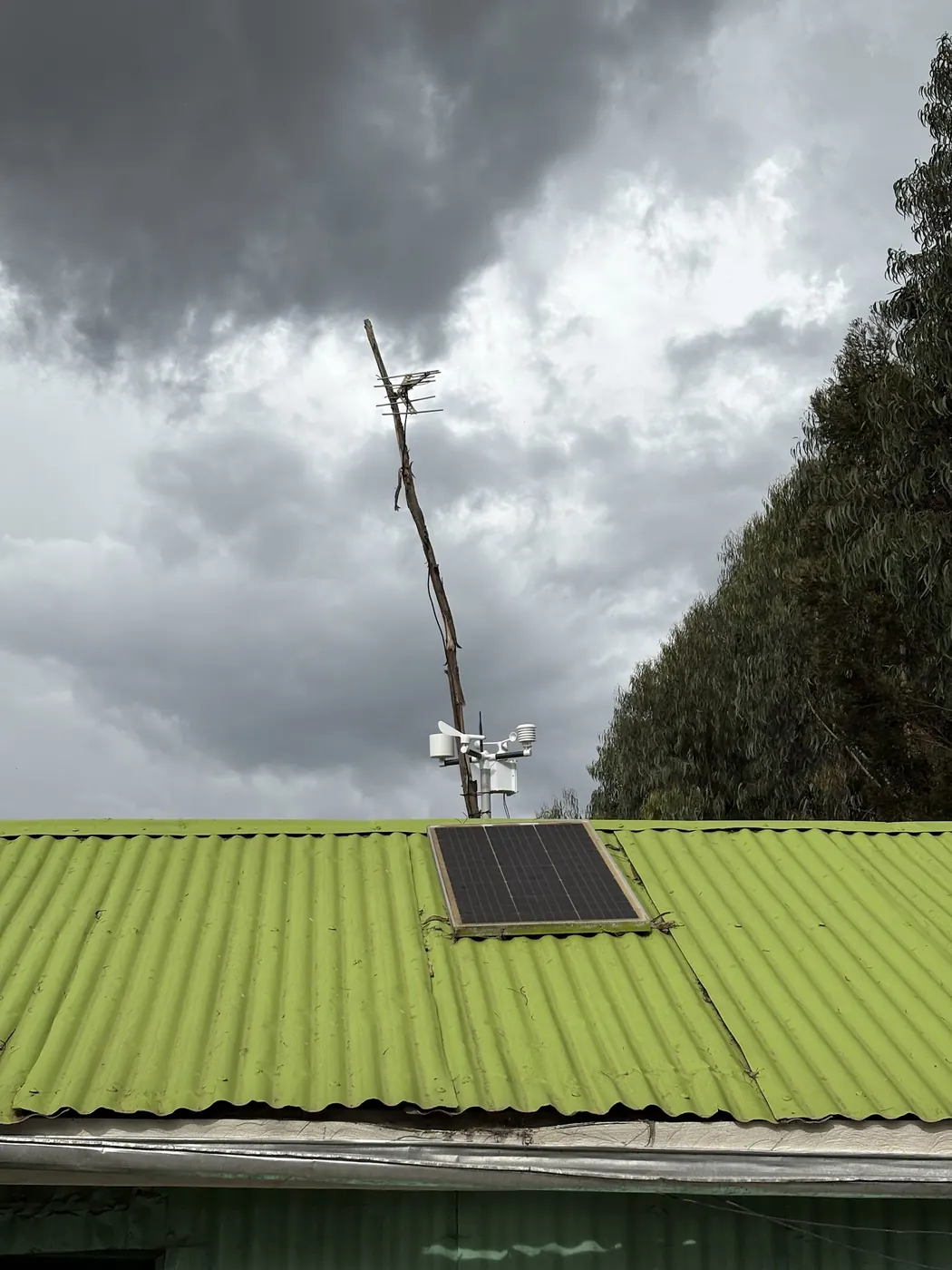
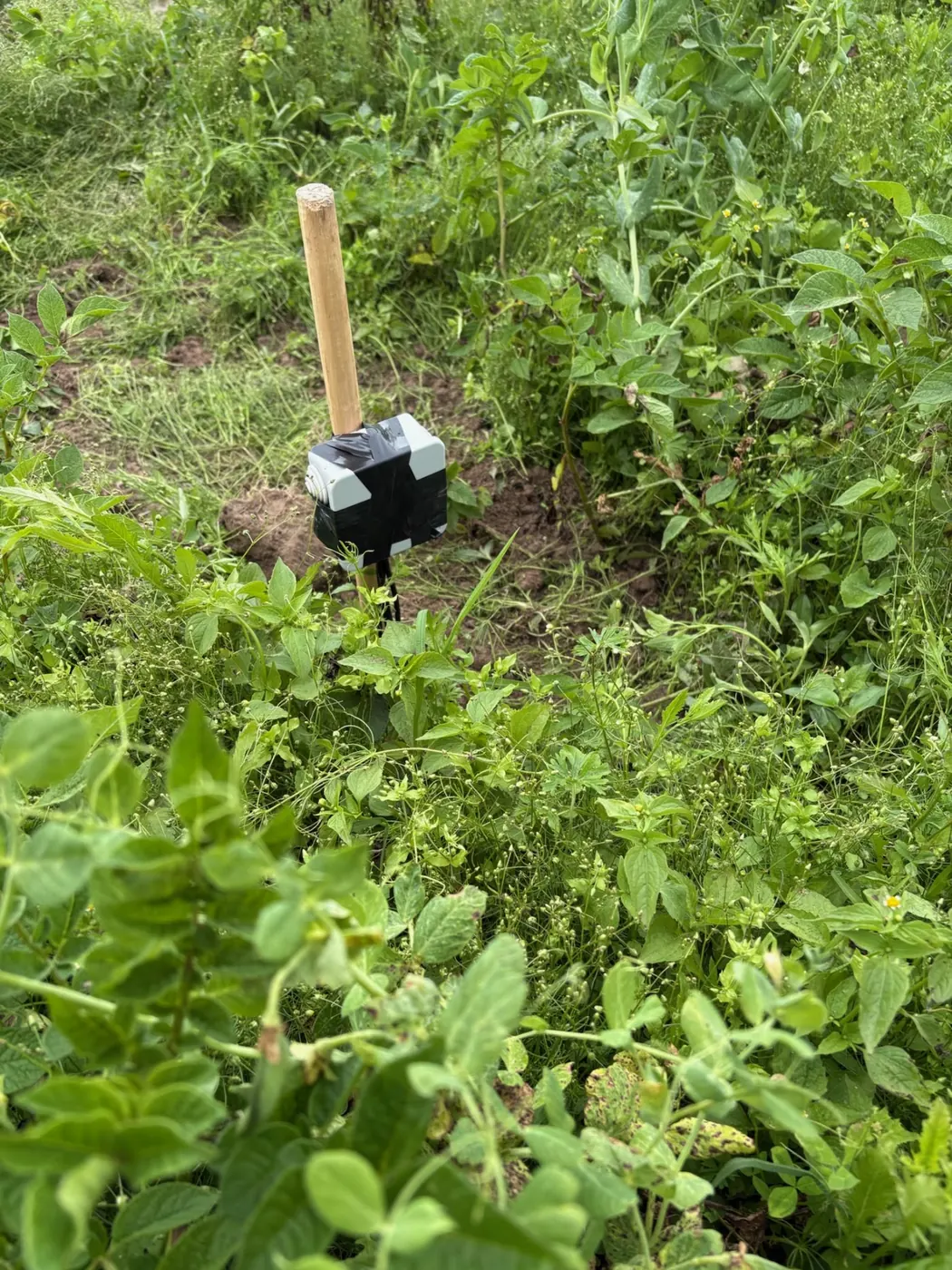
Measured by NuaSense weather stations and soil probes on Kenyan farms, over the period stated with each figure. Past readings, not a forecast.
The regulator's job was never about volume
The Kenya Dairy Board's own profile traces the institution back to 1925, registered as the first cooperative society in the country in 1932, with its statutory role set out under the Dairy Industry Act. That role is regulation and standards enforcement across the formal market, not production targets. KDB does not grow the milk pool. It is supposed to make sure the milk moving through the formal chain, cooling, transport, processing, meets the standards that let a processor sell it as branded product rather than loose milk from an informal seller.
That distinction matters because the 19 percent growth figure and the budget pressure figure are answering two different questions. One is about how much milk the country produced. The other is about how much capacity the regulator has to check what happens to that milk once it leaves the farm gate. A grower reading the headline and concluding that dairy Kenya is thriving so nothing needs attention at farm level is answering the wrong question with the right number.
Formal and informal are not two markets, they are two testing regimes
Kenya's dairy sector has always run on two channels at once. The FAO's account of the National Dairy Development Project, which ran from 1980 as a Dutch-Kenyan bilateral programme and expanded from six districts to 25, documents how price controls on the formal market lasted until May 1992, and how constraints including poor marketing infrastructure and deteriorating support services such as artificial insemination and disease control shaped what farmers could actually sell and where. Smallholder farmers account for over 75 percent of the industry's output by that same account, and a more recent figure from the EEAS partnership brief on Kenya's smallholder dairy systems puts the smallholder share above 80 percent of over 1.8 million producers.
The informal market, milk sold direct to neighbours, hawked by bicycle, moved in cans without cooling, has never been under KDB's testing regime in the same way. It survives on trust between buyer and seller, not on a certificate. When budget pressure reduces how often a regulator can inspect a cooling plant or verify a processor's intake testing, the formal side loses some of its advantage over the informal side, because the thing that made the formal side worth the lower, sometimes slower payment was the assurance behind it.
The decision sits at the collection point, not the herd
None of the sources here say budget cuts will push farmers out of formal markets by any measured amount, and this piece will not invent that number. What can be stated is narrower and more useful: if you deliver to a cooperative or a processor's collection centre, the quality of the testing at that point, milk fat content, adulteration checks, hygiene standards, is what keeps your milk priced as Grade A rather than bulked with lower-quality supply. That testing capacity sits partly with the cooperative or processor itself and partly with regulatory oversight that audits them.
The FAO account of the National Dairy Development Project lists lack of credit, deteriorating AI and disease control services, and limited staff among the constraints that undermined the formal system decades ago. Those are institutional capacity problems, the same category as a budget cut today. The lesson from that history is not that the formal market collapses under pressure. It held. What changed was how much a farmer could rely on consistent grading and consistent service, and that unevenness is what a shrinking regulatory budget threatens to reintroduce.
Consider what consistency actually means at the weighbridge. A cooperative that tests every delivery for fat content and adulteration on a fixed schedule gives every supplying farmer the same yardstick, whatever the weather or the season. A cooperative that tests intermittently, because the equipment is unserviced, because a regulator's audit schedule slips, because a technician's post goes unfilled, starts making grading calls on incomplete information. Some farmers will get graded generously in that gap. Others will not. Neither outcome tells you anything reliable about the milk itself, and neither is something a farmer can appeal against with any confidence, because the record backing the grade is thinner than it should be. That thinness is the actual risk a budget cut introduces, not a headline price collapse.
What extension already tells you about filling a capacity gap
ILRI's Dairy Farmer Extension Services model, tested across seven cooperatives in Uasin Gishu, Kakamega and Nyandarua counties, gives a working example of what happens when a capacity gap gets filled by a different actor. Under that DFA extension trial, each extension officer covered 50 randomly selected farmers with weekly visits on pasture, breeding, calf rearing, milking hygiene, animal health, record keeping, feed formulation and fodder conservation. At Muki Cooperative some farmers recorded up to three extra litres of milk per cow. At Tuiyo Cooperative, daily collection rose from 1,500 to 3,200 litres since the project began.
That is a production and hygiene intervention, not a regulatory one, and it is important not to conflate the two. But it shows cooperatives are willing to fund services that a shrinking KDB budget might otherwise be expected to cover indirectly, extension around hygiene and milking technique feeds directly into the quality that formal-market testing checks for. ILRI also notes the model ran as a co-payment scheme, and some farmers pulled out when they no longer wanted to co-pay, which is worth remembering before assuming any substitute service is free or permanent.
Breed choice will not fix a testing gap
It is tempting to read a regulatory story and reach for a farm-level lever, like switching breeds for hardier or higher-yield cows. The PMC study of farmer breed preferences in western Kenya, a 419-household survey, found Ayrshire the most preferred breed overall, followed by Friesian, with Friesian preferred 4.86 times more for high milk production and Ayrshire preferred 4.16 times more for low feed requirement. Useful information for a breeding decision. It has nothing to do with whether your milk gets tested consistently at the collection point.
The same study notes that over 68 percent of respondents used natural mating rather than artificial insemination, despite AI being the stated preference, because natural mating was cheaper and more available. That gap between stated preference and actual practice is a caution worth carrying into the regulatory question too: a farmer's preferred outcome, consistent grading and fair pricing, and what the system can actually deliver under budget pressure may diverge in the same way AI availability diverged from AI preference.
What user charges already tell you about who pays when budgets tighten
The FAO's dairy project account notes that user charges have been introduced in most services other than extension. That detail predates this month's KDB story by decades, but it describes the exact mechanism a farmer should watch for now: when a regulator's core budget shrinks, the gap tends to get filled by charging the parties who use the service, cooperatives, processors, sometimes farmers directly through cooperative deductions. If KDB's inspection and certification budget contracts further, a plausible route is more user charges on testing and licensing, passed down the chain to the collection point.
This is not a claim that charges will rise by any stated amount. No source here quantifies that. It is a pattern worth watching for in your own cooperative's fee structure over the coming months, because it has precedent in the same institutional history that shaped Kenya's dairy sector before. The mechanism matters because it is invisible until it appears on a payment slip. A price cut is announced and argued over. A new deduction line for testing or certification tends to arrive quietly, folded into a cooperative's monthly statement, and by the time a farmer notices the pattern the fee has already been in place for several payment cycles. This is a genuinely different mechanism from the production-side story most coverage focused on, and it is the one that reaches a farmer's payslip fastest, well before any national statistic catches up with it.
The sector's size makes the regulatory role easy to underweight
The dairy value chain contributes 4.5 percent to national GDP, 14 percent to agriculture GDP and 44 percent to the livestock sub-sector, according to ILRI's figures cited alongside the DFA trial. The USDA overview of the Kenya dairy industry puts Kenya's herd as the second largest in Africa by size, with dairy contributing 17 percent to agricultural GDP and 3.8 percent to national GDP by its own count. National production sits at roughly 4.6 billion litres a year against demand of about 8 billion litres, a gap the sector has been closing but has not closed.
A sector this large, still short of demand, growing in volume, is precisely the kind of story that makes a budget line for inspections look like a rounding error next to the headline growth number. It isn't. The gap between demand and supply is a market opportunity story; the regulatory budget is an institutional capacity story, and squeezing the second does not close the first. If anything, the two working against each other, growing volume with shrinking oversight capacity, is the exact condition under which quality problems get discovered late rather than early.
Forage systems raise the stakes on what gets tested
The Sustainable Dairy Farming initiative, led by KALRO with Teagasc and Greenfield International according to the EEAS partnership brief, promotes forage-based systems capable of supplying over 90 percent of a dairy animal's nutritional needs, with improved forages able to double milk yields. If that kind of yield gain spreads, cooperatives handling that milk face more volume through the same testing infrastructure, not less. A regulator working with a smaller budget while volume through the formal chain grows is a mismatch that compounds rather than resolves itself.
This is also where a farm's own water and forage decisions connect to something more measurable than regulatory policy. Growers making forage decisions on limited land, particularly the smallholdings averaging 0.8 hectares that the PMC study documents in parts of western Kenya, are already managing water and moisture as the binding constraint on any forage-based feeding gain. That is the same argument this site made in the piece on coffee irrigation and water decisions, where the actual limiting factor turned out to be water delivered per tree rather than the disease control intervention getting the headlines. The dairy budget story runs the same shape: the visible policy headline is not where the farm-level decision actually sits.
What a farmer can actually verify this month
There is no dataset here that tells an individual farmer whether their specific cooperative's testing frequency has changed. What can be checked directly is the cooperative's own record: has milk been rejected or downgraded more often in recent months, has the interval between quality checks lengthened, has a new fee appeared on your payment statement that was not there before. These are observable at farm level without waiting for a national report to confirm a trend that started somewhere upstream. Tracking farm-level conditions, feed intake against milk output, water availability against forage growth, is a separate but related discipline, and it is one where instrumented monitoring genuinely helps, as described in NuaSense's own account of smart farming trends in Kenya, covering data-driven decision-making and mobile advisory tools alongside sensor deployment. None of that substitutes for regulatory testing of milk quality. It does give a farmer independent evidence of what happened on their own block, which is useful leverage if a cooperative's own explanations for a downgrade start looking thin.
Where this leaves the actual decision
The occasion for this piece was a headline pairing sector growth with regulatory budget strain. The decision it changes is not whether to keep dairy farming, switch breeds, or chase the demand-supply gap; those are separate questions with separate evidence. The decision is whether to treat your cooperative's testing and grading process as a fixed, reliable backdrop or as a variable that needs watching now that its enforcement backing has less money behind it. Kenya's dairy sector held together through worse institutional strain in the 1980s and 1990s, per the FAO's own account of that period, but it held unevenly, and unevenness at the collection point is exactly what shows up first in a farmer's pay. If you manage irrigation or water allocation on land that also carries a dairy herd, matching feed and water planning to what your own irrigation optimisation setup shows is a separate lever from anything a regulator controls, and it stays fully in your hands regardless of what happens to KDB's budget line next year.