On 24 July 2025, 52 farmers at Kuona Mbele Farmers' Society watched a spray drone work a field. The drone awareness training run by the University of Eldoret's outreach centre with Customized Aviation Solutions recorded the machine covering one acre in eight minutes from a thirty-litre tank. It produced a fine, even mist. That is the only spray drones Kenya figure in this whole comparison actually measured on Kenyan soil. Every other number below comes from trials in Iran, the United States or elsewhere. The honest work is in saying which is which before you spend money on either machine.
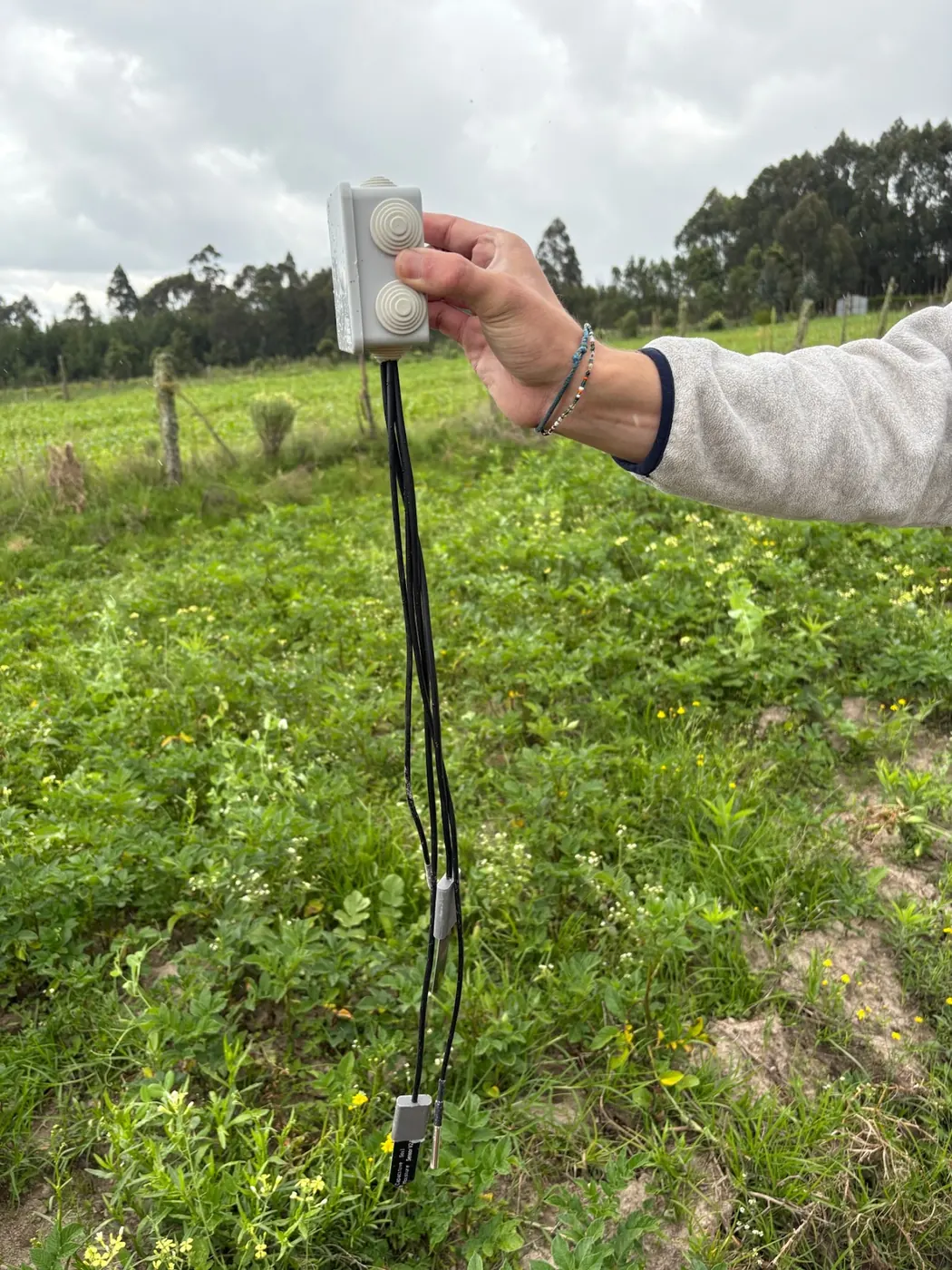
Measured by NuaSense weather stations and soil probes on Kenyan farms, over the period stated with each figure. Past readings, not a forecast.
The decision in front of you
A commercial holding running knapsack sprays has three real options. Keep the knapsack, hire a drone operator per pass, or buy a unit and run it yourself. None of those choices has a published Kenyan shilling figure attached to it in the material available. So this piece will not manufacture one. What it can do is lay out acres covered per hour. It can show what each machine demands of the operator, and where the size of your holding tips the arithmetic one way or the other.
The Kuona Mbele demonstration is a data point, not a business case. It tells you a drone can move fast over a Kenyan field. It says nothing about the price of hiring one, buying one, or training someone to fly one. None of that was measured there. Farmers at the event asked for exactly this kind of follow-up: crop-specific sessions and a pilot on wheat fields. That had not happened at the time of the training. Treat any spray drone quote you get from a dealer as a starting point for your own arithmetic, not a settled fact.
Acres per hour, and where the ratio comes from
The clearest throughput comparison in the evidence is Iranian, not Kenyan. In field trials for wheat bug control in Fars province, a UAV sprayer managed 5.5 hectares per hour. A conventional backpack sprayer managed 0.8 hectares per hour, a throughput ratio of roughly seven to one. In a separate wheat weed-control trial, UAVs reached 83.1 percent field efficiency. That was ahead of tractor-mounted sprayers at 78.7 percent and turbo mixer sprayers at 66.3 percent.
US extension guidance from the University of Georgia's overview of spray drone regulations and operations puts typical commercial spray drone coverage at 10 to 40 acres per hour. Battery life is only 5 to 20 minutes per charge while carrying spray solution. A separate extension source notes some models managing 21 hectares per hour in open field conditions and up to 15 hectares per hour in hilly orchards. In hilly orchards, a knapsack operator would be walking slopes on foot.
None of these hectare-per-hour figures were measured on a Kenyan smallholding. Kenyan field sizes, hedgerows and access tracks are not Iranian wheat blocks or Georgia row crops. What transfers is the shape of the gap. A machine refills every few minutes but moves faster per minute than a person walking with a tank on their back. On a one or two acre plot that gap barely matters. Refuelling, travel and setup eat the time saved. On a twenty or thirty acre block it starts to matter a great deal, purely on time.
Where deposition and drift undercut the speed story
Speed is not the whole picture. The same body of research that gives drones their throughput advantage also documents where they lose. The Iranian comparison tested drone forward speeds of 21.6, 26.2 and 27.0 km/h against boom sprayer speeds of 4.39, 6.00 and 8.57 km/h. It found the lowest spray deposition rate, 2.67 percent, at the fastest drone speed. The boom sprayer's slowest, most careful pass achieved the highest deposition of the study, 3.85 percent. The drones also scored a spray quality index of 1.27 against 3.07 for boom sprayers, a meaningfully worse result. The performance evaluation published on PMC names lower deposition and higher drift at speed as unresolved technical challenges for drone application generally, not a solved problem.
A separate vineyard fumigation study using a Yamaha R-max II UAV found 28 to 54 percent of the applied spray relocated outside the intended area. Of those losses, 82 percent occurred more than 50 metres from the aircraft. That is a large share of product landing somewhere other than the target block. It is a loss pattern a knapsack operator walking row by row simply does not generate the same way.
The lesson for a Kenyan buyer is not that drones fail. Speed and accuracy trade against each other. The trade gets worse as you push the drone faster to cover more acres in less time. If a service provider is quoting you an aggressive acres-per-hour figure, ask what forward speed and flight height that number assumes. The same literature that gives the speed also gives the deposition cost of it.
What the machine still needs from you
A spray drone does not remove the operator, it changes what the operator does. Purdue Extension's guidance on common spray drone questions notes that spray drones carry no agitation devices. So mixing product directly in the tank means two people physically shaking the unit, or preparing a slurry separately in a bucket before loading. They also carry no onboard rinse tank, unlike ground rigs. So leftover tank mix has to be sprayed out over field edges or recently treated ground before a clean-water rinse can happen properly. An added step a knapsack user does not have.
Swath management is another skill the drone operator has to learn that a knapsack user never needs. Streaking, uneven bands of coverage across a field, comes from improper swath management. It is corrected by testing the swath and adjusting height, speed or droplet size, according to the same Purdue guidance. Wind displaces the swath further, concentrating product unevenly. Kansas State's extension guidance on spray drone management recommends flying at 8 to 12 feet above the canopy and working in wind speeds of 3 to 7 mph. Conditions a farm manager has to check before every flight, not once at purchase.
On a Kenyan holding this points to a labour trade rather than a labour saving. The physical burden of carrying a loaded knapsack has historically limited women's participation in commercial spraying work. The Kuona Mbele training material frames drones as removing that barrier and opening the door to drone service enterprises. But the new labour, mixing without agitation, managing swath and rinse steps, checking wind before flight, is real work too. It shifts who can do the job. It does not make the job disappear.
Chemical use: the margin worth checking
One of the more concrete claims in the evidence is that targeted herbicide spraying with drones can cut chemical use by up to 30 percent compared with broadcast spraying. A separate wheat trial recorded a UAV sprayer using 11.1 litres of pesticide per hectare in a comparison against turbo mixer and tractor-mounted sprayers. A rice blast trial found a UAV applying 18 litres of solution per hectare achieved no significant difference in disease control compared with backpack sprayers. The lower volume did not cost control efficacy in that case.
This follows on from how a farmer can use their own weather station to time a spray without waiting on a forecast. That decision sits upstream of which machine ends up doing the spraying.
Related reading on this site: irrigation optimisation.
These are real savings where they were measured. But they answer a narrower question than most buyers assume. Whether less product achieves the same control, not whether the drone itself costs less to run once fuel, batteries, maintenance and a trained pilot are added up. No cost figures for any of that exist in the material behind this article, in Kenyan shillings or any other currency. This piece will not invent one. What is worth carrying forward is that a drone service provider quoting reduced chemical volumes should be able to show you the litres-per-hectare figure they are actually applying. You should be able to compare that to what your current knapsack regime uses.
The dilution problem nobody has solved yet
The single most practical constraint on Kenyan drone spraying right now is not the hardware, it is the absence of a dilution standard. The Kuona Mbele training record states plainly that there are no agrochemical dilution guidelines tailored to drone application in Kenya. Manufacturer recommendations are calibrated for knapsack sprayers and do not translate to drone spray volumes and delivery mechanisms. Participants at that training explicitly asked for research into optimal drone dilution rates, the effect of drone spraying on pest control and yield, residue levels, and operational and regulatory guidelines. None of which existed as of that training.
This matters more than any throughput figure. A drone covers ground several times faster than a knapsack. On the Iranian ratio above, that is not an advantage if the dilution rate applied through it is simply guessed at. It is carried over from a knapsack label that assumes a completely different droplet size and delivery volume. US spray drones typically apply 1 to 5 gallons per acre through 1 to 8 gallon tanks. That is a volume regime unlike a backpack tank calibration. Until Kenya has its own tested dilution tables for drone delivery, a farmer hiring a drone operator trusts that operator's judgment on concentration. It is not a validated standard. That is a real gap. It belongs in any conversation with a service provider before a contract is signed. It sits alongside the basics covered in a safe spraying guide for Kenyan farms, which apply regardless of which machine delivers the product.
Where the acreage math actually turns
Nobody in this evidence measured a Kenyan break-even acreage between a knapsack and a drone, so this section will not claim one. What can be reasoned through, using figures actually in hand, is the shape of the trade. A knapsack sprayer, at the Fars province figure of 0.8 hectares per hour, needs roughly 12.5 hours to cover ten hectares. That is continuous spraying, ignoring refills and walking time entirely. A UAV at 5.5 hectares per hour covers the same ten hectares in under two hours of flight time. But that flight time is broken into short bursts by battery limits of 5 to 20 minutes per charge. It means frequent stops to swap batteries and refill tanks.
On a half-acre kitchen garden or a two-acre smallholding, that gap barely registers. Setup time for either machine dwarfs the actual application time. On a holding of twenty, thirty or more hectares, the gap compounds daily during a spray window, and the knapsack cost is not just hours. It is the physical toll of repeated loaded carrying across that many hours. That is precisely the constraint the Kuona Mbele material names as limiting who can even take on that work.
The honest answer for a Kenyan holding sitting between those extremes, five to fifteen hectares, is that no verified table exists. It cannot tell you exactly where the line falls, because the throughput figures above were measured in Iran and the US, not on Kenyan field sizes, terrain or crop spacing. You are the one who has to walk your own block and time your own knapsack crew over a measured area. Compare that honestly against what a local drone operator quotes for the same area, rather than importing a foreign ratio wholesale.
What a spray record from either machine should contain
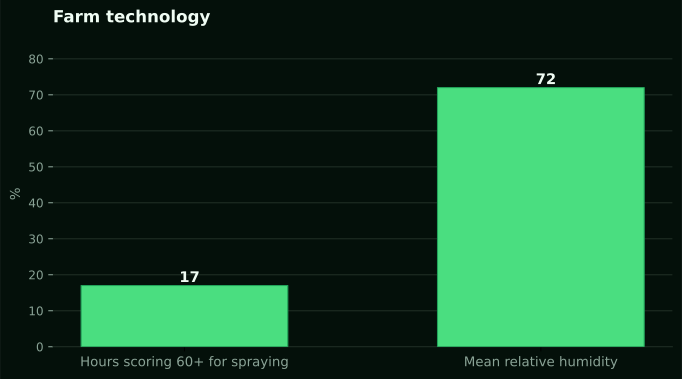
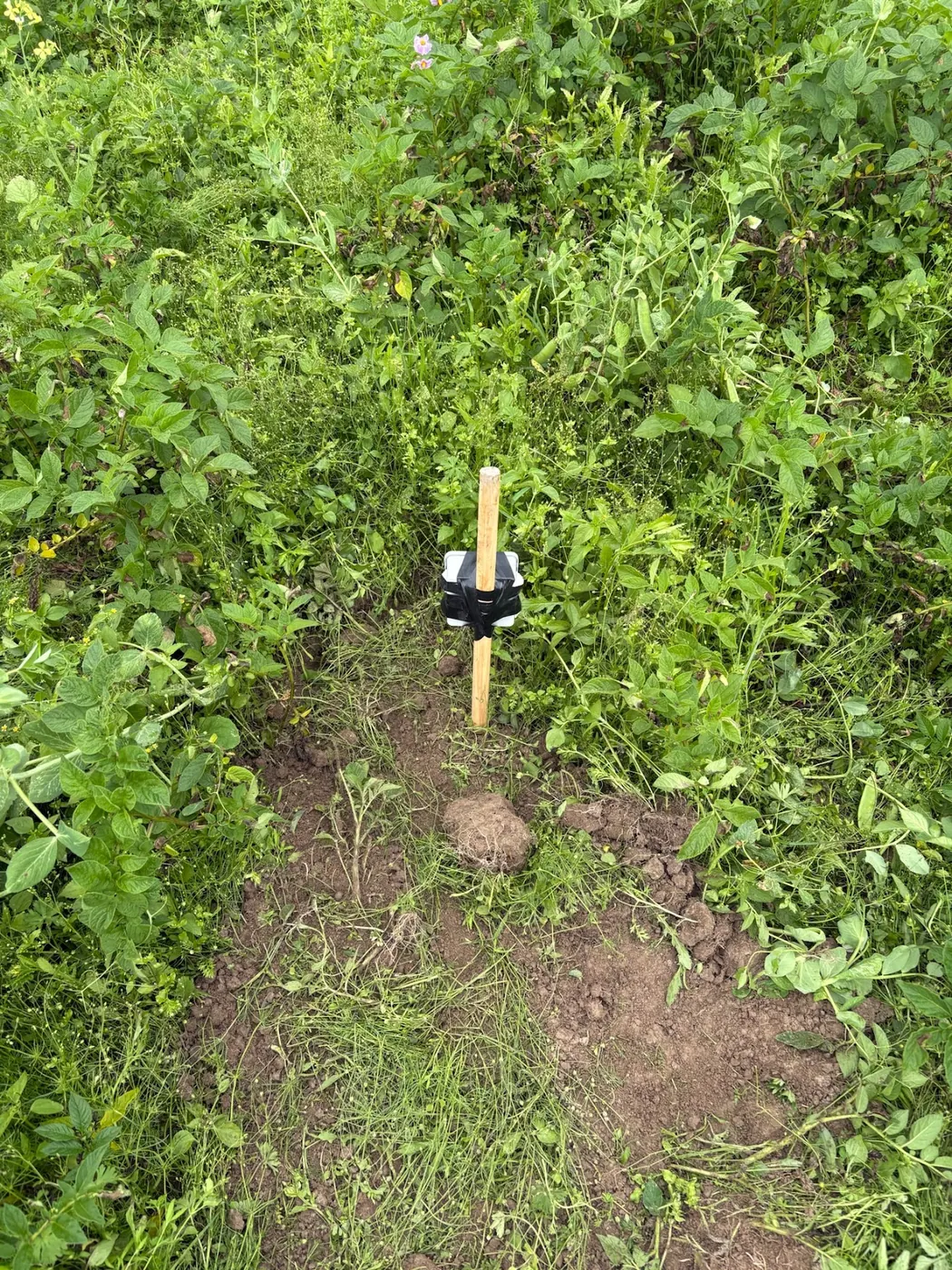
Whichever machine applies the product, the record of what happened matters more than the machine itself. Kansas State's guidance on spray drone conditions recommends wind speeds of 3 to 7 mph and temperatures between 60 and 85°F, roughly 15 to 29°C. Those are favourable for most pesticide applications, whether flown by drone or applied by hand. A NuaSense weather station computes a spray window quality score hourly from its own air temperature, humidity, wind and leaf wetness readings. Across our own network over 23 August to 20 September 2026, only 17 percent of station-hours scored 60 or better on that index, while 54 percent scored below 30. That is not a Kenya-wide forecast. It is a measured record across seven stations for that period, but it makes a point independent of which sprayer you own: good spray windows are a minority of the available hours. And neither a fast drone nor a diligent knapsack crew helps you if the application happens in a bad one.
A separate post on this site works through how a farmer can compare scouted pest counts against a spray threshold rather than a calendar date. The same logic applies to machine choice: buying speed does not fix a decision about when to spray. It only changes how fast you can act once the decision is already made. Whichever machine did the work, keep a written log of wind, temperature and the hours since last rain. That log lets you compare a bad outcome against a bad decision, rather than blaming the equipment.
Reading a drone service quote
If a drone service operator quotes you a price per acre, the questions worth asking before you accept it are not about the machine's specifications. They are about what those specifications were measured doing. Ask what forward speed and flight height they fly at, because both directly affect deposition according to the Iranian trial data above. Ask what litres per hectare they are applying. That is the figure that determines whether the chemical-savings claims made for drones generally, up to 30 percent less herbicide in targeted applications, actually apply to your crop and your product.
Ask, too, what dilution rate they are using and where it came from. According to the Kuona Mbele training record, no Kenya-specific drone dilution standard currently exists. An operator who cannot answer that question is applying a knapsack-calibrated rate through a drone nozzle and hoping the physics work out. That is exactly the gap the training participants flagged as needing research. None of this makes drone spraying a bad idea. It makes it an idea that still needs the paperwork behind it, on the Kenyan side. That paperwork exists for knapsack spraying already.
Buy, hire, or stay with the knapsack
A drone purchase makes sense only on large acreage. It must be consistent across seasons too, enough to justify a machine sitting idle between spray windows. And someone on the farm must be willing to learn swath management, mixing without agitation and the rinse-and-flush routine that a ground rig handles automatically. None of the evidence here gives a purchase price for that machine in Kenya. Weigh the decision against your own quotes, not an imported figure.
Hiring a drone operator per pass suits a mid-size holding. It needs occasional fast coverage during a tight window, particularly where the field has become inaccessible to a ground rig. US extension guidance names the reasons directly: crop damage, wet ground or difficult topography. Or where only a specific patch needs spot treatment rather than a full pass. Arguably the strongest fit now for many Kenyan holdings. It avoids the capital outlay and puts the dilution and calibration problem on someone who, ideally, is already dealing with it across multiple clients.
Staying with the knapsack remains the right call on small plots. There, setup time dominates either way, and the labour is already available and willing. It is also, for now, the option with a settled dilution standard behind every product label. The drone route still lacks that in Kenya. None of these three is universally correct. The honest position is that the choice turns on your acreage, your labour, and whether the dilution and drift questions above have been answered for your specific crop. Not on which machine looks more impressive at a field day.
Frequently asked questions
Also drawn on for this piece: Agricultural Applications of Spraying Drones.