When a grower asks about the price of agriculture sensors in Kenya, there are really three questions sitting underneath. Is a handheld meter worth carrying? Is one probe worth burying? Or is a networked station worth paying for every month? Which answer fits depends on your soil, what the crop is worth, and how much you are already guessing. Nothing below invents a shilling figure where the record has none. Where one does exist, it is stated plainly.
Measured by NuaSense weather stations and soil probes on Kenyan farms, over the period stated with each figure. Past readings, not a forecast.
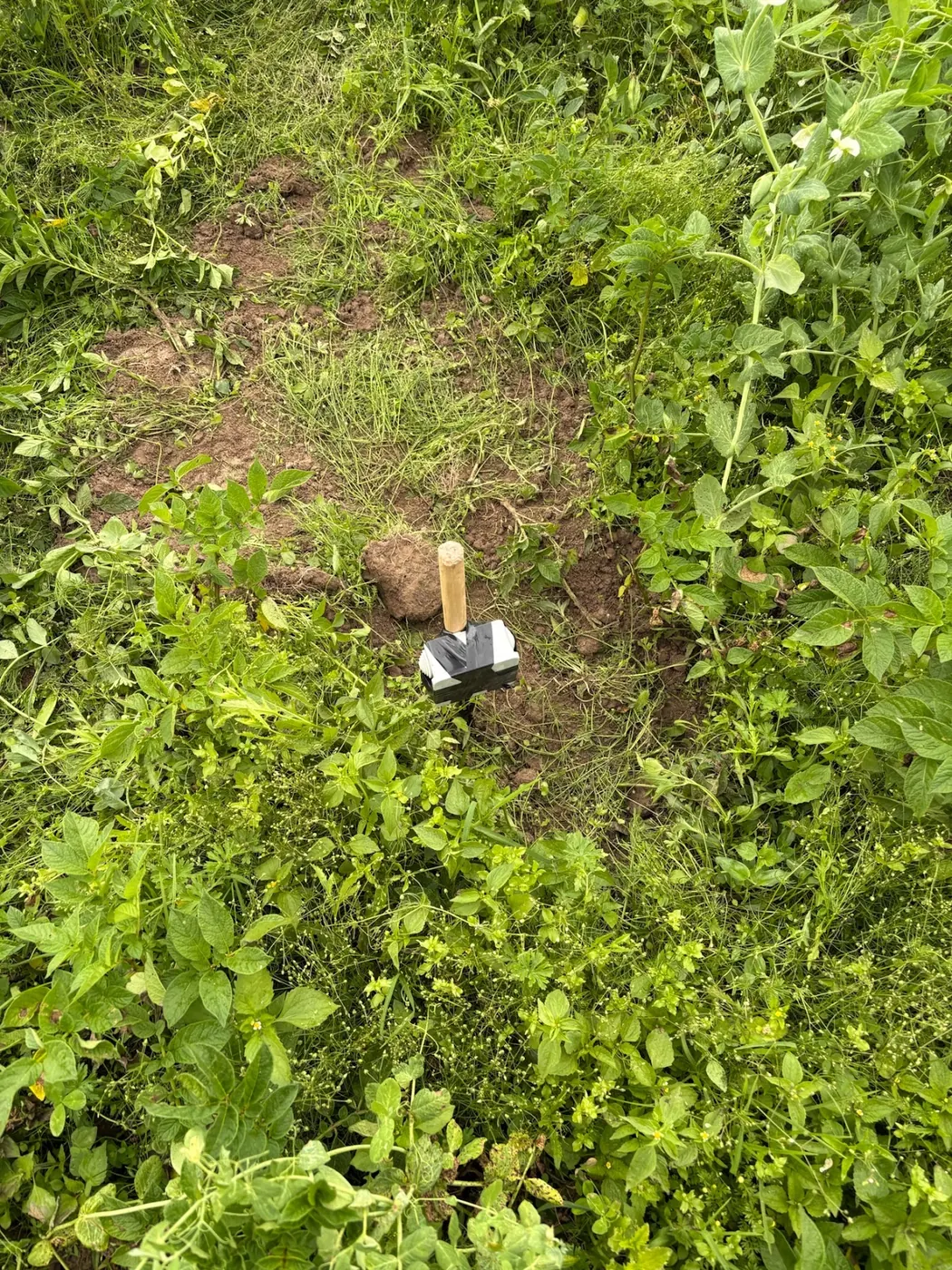
A handheld meter tells you one point, once
Push a handheld soil moisture meter into the ground and you get one reading at one spot, right then. The research on low-cost handheld sensors is worth a look here, though none of it quotes a Kenyan retail price. One calibration exercise, described in a Frontiers study developing a low-cost handheld soil moisture sensor, took 408 soil samples from 83 locations and found the device performed well in mineral soils (root mean square error of 0.035 m3 m-3, correlation R = 0.90) but far worse in forest organic soil (0.078 m3 m-3, R = 0.80). For a highland grower on volcanic or organic-rich soil, that gap is the whole story. The same tool that reads reliably on a mineral loam block can mislead you badly on a peaty highland plot.
Be clear about what that study is. It is a research device, calibrated against gravimetric sampling under a lab-supported protocol, not a shelf product sold to Kenyan agrovets. Set against commercial handhelds like HydraProbe and ThetaProbe, it agreed closely on accuracy (correlation above R = 0.90). The source says nothing about what any of these units cost to buy, and nothing about Kenyan availability. If you are hunting for a cheap point-reading tool, read those accuracy numbers as evidence that low-cost sensing can work. They are not a shopping list.
A handheld, when it is available and reasonably well calibrated, buys you a spot check before an irrigation decision, or a read while walking a block that looks stressed. What it cannot buy is a trend. One reading tells you where the soil sits right now. It does not tell you whether the soil is drying or wetting, or what went on overnight while nobody was walking the field.
Calibration is a bill you keep paying, not a one-off
The Frontiers work shows soil-specific calibration tightening the root mean square error from a generalised 0.035 m3 m-3 down to 0.031 m3 m-3 for loam and 0.034 m3 m-3 for sandy loam. That improvement is real, but you pay for it with gravimetric sampling: coring a soil sample, weighing it, drying it in an oven at 105 degrees Celsius until it hits a constant dry weight, and weighing it again. The Arizona Extension guide to maintaining and calibrating field-installed soil and plant moisture sensors says plainly that this gravimetric method, reliable as it is, takes labour and time, destroys the sample, and is impractical at field scale.
That is the running cost people forget when they treat a meter as a single purchase. Buy a meter once and never recalibrate it, and it drifts against the soil it is reading, especially as texture, salinity and temperature move through a season. Buying the meter is the small decision. Whether you will ever core a sample, dry it and check the meter against it is the real one. For most growers the honest answer is that they will not. That makes the accuracy figure quoted in any study a ceiling, not a guarantee, for what you actually get in the field.
What a single buried probe adds over a handheld
A buried probe left in place takes the walking out of it, and the guessing about when to take a reading, because it reads on its own schedule. It cannot move to a different spot the way a handheld can, so it tells you plenty about one location and nothing about the rest of the block. The Arizona guide lists the physical failures that defeat a buried probe over a season: battery depletion, probe corrosion, mineral buildup, damaged cables, sensor displacement and wireless connectivity problems. None of that is exotic. A rodent chews a cable. A probe gets knocked out of position during weeding. A connection drops for a week and nobody notices until the dashboard goes flat.
The same guide notes that soil variability in texture, salinity and temperature significantly influences readings, that sensors drift over time, and that frequent recalibration is needed to avoid inconsistent data. Its worked example is Arizona's hot arid conditions, where standard calibrations often fail in sandy, clay and calcareous soils, and where saline irrigation water skews electrical conductivity readings. Kenyan soils are not Arizona soils, and that specific failure mode should not be assumed to transfer directly. What does transfer is the underlying lesson. A single probe answers a narrower question than its owner usually expects, and it needs somebody checking on it, not just installing it once.
The networked tier: a station plus several probes
Go beyond a lone probe by putting a weather station on a mast. It can also bring soil probes online through a short-range radio link. That way, several points across the farm report together instead of one point reporting alone. Here the CGIAR excerpt helps most. It says falling sensor prices, the spread of internet-enabled phones, and low-power wide-area network technologies are what put this kind of monitoring within reach of a smallholder at all, according to CGIAR's Smallholder Big Data overview. The same source is also candid: precision agriculture as practised on large commercial farms runs into the hundreds of thousands of dollars. That is well beyond a smallholder's reach, and it gives a useful ceiling for measuring a few networked sensors.
What a networked system gives you over a single probe is comparison across the farm: one corner drying faster than another, one block staying wetter after rain than the rest. What it does not give you automatically is interpretation. The CGIAR source describes the intended uses of this kind of sensor data as predicting the best harvesting window, herbicide application window and sowing window. That work sits on top of the raw readings, not inside the sensor itself.
Where NuaSense sits, and who should skip it
A NuaSense weather station costs KES 30,000, and a soil sensor costs KES 7,000, both excluding taxes. Variants cost KES 9,000 for two moisture and two temperature channels, or KES 10,000 for a version that also measures electrical conductivity. The station reaches the internet on its own over a Safaricom SIM or Wi-Fi. It is solar powered and reports air temperature, humidity, pressure, sunlight, rainfall, wind and direction roughly every ten minutes. Soil sensors report at the same interval over the short-range link the station provides. There is no separate gateway to buy. The dashboard is free for five downloads a day. Heavier use costs one US dollar per 1,000 API calls, and SMS or WhatsApp alerts cost 0.03 US dollars a message.
Who should not buy one? A smallholder farming under an acre or two of a single crop, where the value at risk cannot cover even the cheapest tier. Also a grower who has no intention of checking a dashboard or acting differently because of what it shows. A station earns its cost on a block large enough, or valuable enough, that a missed irrigation window or an undetected dry patch costs more than the hardware. For everyone else, a handheld meter and a notebook, or none at all, is the more honest spend.
Related reading on this site: crop protection, Farm tech in Kenya: apps, sensors, extension or automation?.
Comparing the three levels side by side
The table below shows what each tier delivers and where it stops, based only on figures established above. It is a comparison, not a recommendation for any one farm. Acreage and crop value still decide the answer.
- Handheld meter: single spot reading, needs a person to walk it; well suited to mineral soils per the Frontiers calibration (R = 0.90), noticeably worse on organic soils (R = 0.80); no purchase price established for Kenya, no trend over time
- Single buried probe: continuous reading at one location; removes the walking, adds battery and cable maintenance as an ongoing job; still answers for one spot only, not the whole block
- Networked station and probes: KES 30,000 for the station plus KES 7,000 to 10,000 per soil sensor, excluding taxes; running costs of roughly one US dollar a month in Safaricom data where used, one US dollar per 1,000 API calls, and 0.03 US dollars per alert; covers a whole farm's comparison, still needs someone reading and acting on it
The failures that actually break a networked system
The failure modes documented in the Arizona guide are not software problems. Battery depletion, probe corrosion, mineral buildup on the sensing element, damaged cables and lost wireless connectivity are physical, mundane, and cheap individually to fix. They are easy to forget, because a dashboard that has gone flat looks the same whether the cause is a dead battery or a rodent-chewed wire. The guide notes that wireless sensors in particular are prone to battery depletion and connectivity problems that cause data loss or erratic measurements. Physical damage from rodents or loose connections compounds the problem.
This is the running cost people forget when they price a networked system by the hardware alone. Somebody has to walk the probe line every few weeks, check that a reading has not gone flat, and swap a battery before it fails rather than after. A NuaSense product page sets out the sensors-in-the-field and intelligence-layer structure that a networked system uses to flag exactly this kind of gap, but no dashboard replaces the physical check. Sap-flow and heat-dissipation plant sensors carry a related limit worth naming here: the Arizona guide says they are best suited to tracking relative change over time, not to determining exact irrigation needs, because rapid transpiration shifts and probe misalignment introduce real error.
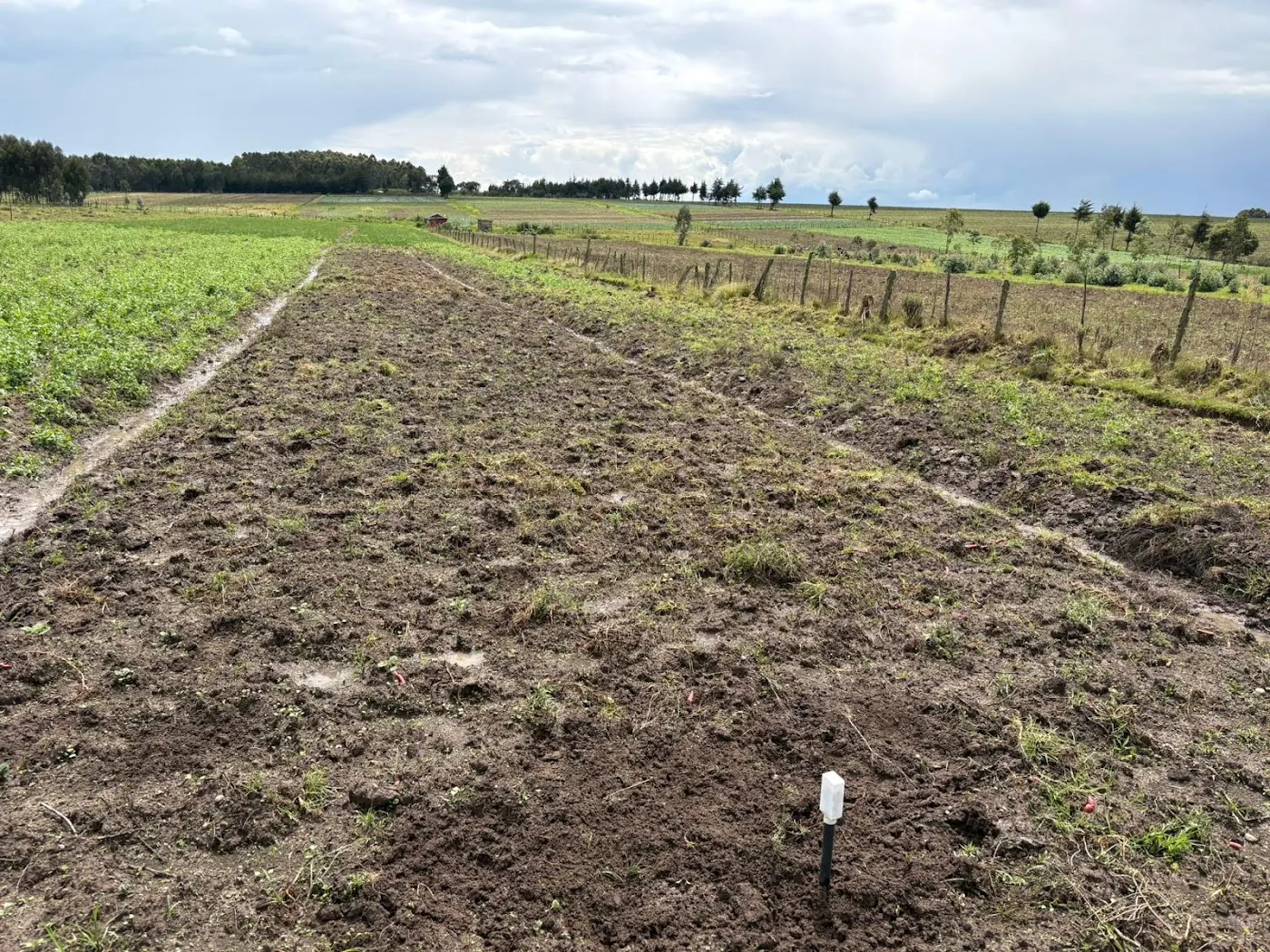
The interpretation layer is the purchase most people skip
A reading on a screen is not a decision. The systematic review of artificial intelligence adoption in East African agriculture, covering 1985 to 2025, found adoption across the region remains relatively low and uneven. It named limited rural infrastructure, high costs, inadequate digital skills and weak integration with extension systems among the barriers, according to the 2026 systematic review in The Scientific World Journal. Kenya is one of the countries named in that review as having agriculture contribute a substantial share of GDP and employ a large share of the population.
Another point: MIT D-Lab's look at IoT for smallholder farming doesn't mince words. Implementing organisations can't count on most farmers to figure out, buy and take up IoT solutions on their own, it says. It wants funders to put in at least five years of backing to build evidence that these systems work sustainably at smallholder scale, according to the MIT D-Lab review of low-cost sensors for agriculture. The same review records a Kenyan setup: an Upande temperature and humidity IoT device at Kikaboni Farm in Olooloitikosh, managed by horticulture manager Emmanuel Biketi. That's one of the homegrown solutions Kenyan companies and university groups have been building, since off-the-shelf imports are often unavailable or don't make economic sense locally.
For a Kenyan buyer, the practical side is simple: budget time and attention for reading the dashboard, not just money for the hardware. A system nobody looks at is a sunk cost with a solar panel on top. An earlier post on percent of scale versus volumetric water content worked through what the two probe depths on a networked soil sensor actually measure and how their readings diverge. That is worth reading before you treat any probe number as an absolute rather than a relative signal.
Data has a cost that is not measured in shillings
Free or cheap farm services come with a cost that never makes it onto an invoice. The CGIAR overview says it plainly: when a service is free or cheap, the smallholder becomes the product. Yield estimates pooled from that smallholder's data can be resold to banks, who get a better harvest estimate than traditional methods would give them. That doesn't mean you should dodge every free tool. It does mean asking, before you sign up for any dashboard or app, who else sees the data and what they do with it. CGIAR's responsible-data guidelines were drawn from 130 external resources plus privacy and ethics material from seven of its centres, because open and restricted agricultural data need different handling.
NuaSense sells the hardware and the service around it, never the data underneath: a farm's own readings sit on a private dashboard alongside public datasets like county market prices, rainfall and satellite crop condition. Those public datasets are published separately in the open at agriculture-data.com. That split, sensor readings kept private to the farm that paid for them, is worth checking on any platform before a grower connects a device to it. A system that quietly resells pooled readings is charging a price that never shows up in the agriculture sensors price conversation at all.
What the numbers on your own dashboard actually look like
To make that concrete, take a networked system across seven NuaSense weather stations from 31 August to 27 September 2026. Air temperature ranged from 3.7 to 36.5 degrees Celsius, mean 18.8. Relative humidity averaged 71 percent over the same window. Rainfall told a sharper story: totals across four stations over the same period ranged from 0.4 mm to 65.7 mm. That spread is between stations on different farms, not a single regional figure. Of the 8,911 ten-minute readings, only 1.6 percent recorded any rain at all. Soil moisture across two probes averaged 78 percent of sensor scale, with most readings between 72 and 87 percent. That figure is on the sensor's own scale, not calibrated volumetric water content.
A single handheld reading, taken once on one afternoon, can't show you this kind of variation. It's also the kind of variation that makes the case for the networked tier weaker on a small, uniform block and stronger on a farm spread across different soils or microclimates. Reference evapotranspiration averaged 1.4 mm a day across the same seven stations, a reminder that even the derived numbers a station produces (ET0, vapour pressure deficit, spray window quality) describe a moving target, not a fixed spec sheet.
Deciding what to buy this season
Start with your acreage and the crop value at stake, not the sensor catalogue. On a small, uniform plot with a low-value crop, a handheld meter used honestly as a spot check is usually enough, or no purchase at all, leaning on judgement and the free public datasets already out there. If you manage several blocks of differing soil or a higher-value crop, and a missed irrigation window has a real cost, that's when the networked tier's KES 30,000 station and KES 7,000 to 10,000 soil sensors start to pay for themselves, provided somebody actually checks the dashboard and walks the probe line.
A related piece on this site took the same acreage question and ran a worked break-even sum from a US trial, in how to work out if farm sensors will pay on your farm. The arithmetic there is a better starting point than any generic price comparison. The honest summary here is narrower: a handheld meter buys a point, a single probe buys a trend at that point, and a networked station buys comparison across a farm. But every one of those tiers still needs a person who reads the number and changes what they do because of it. The tool is never the whole purchase.