For drone rules on a Kenyan farm, start with one name: the Kenya Civil Aviation Authority. The Civil Aviation (Unmanned Aircraft Systems) Regulations, 2020 define "Authority" as exactly that body, and they were published in the Kenya Gazette on 3 April 2020. If a dealer tells you a drone is "approved" and cannot say by whom, treat that sentence as a sales line, not a permission.
This is for a grower or agrovet on a phone, working out whether to buy a drone, hire one, or skip both. You won't find a fee table here. The Regulations text we use has no registration fee, no certificate fee, no processing time, so none is printed here. Before you budget a shilling, ask the Authority for the current figures in writing.
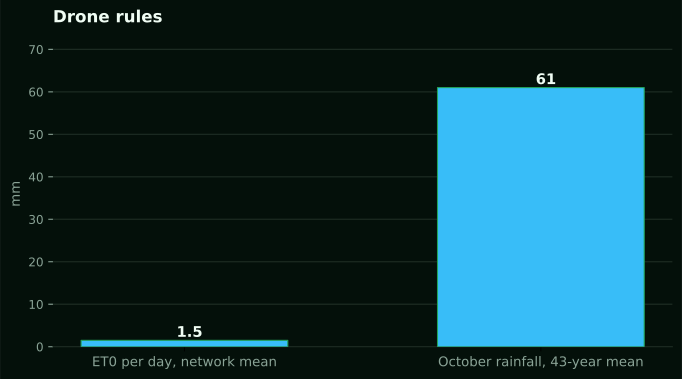
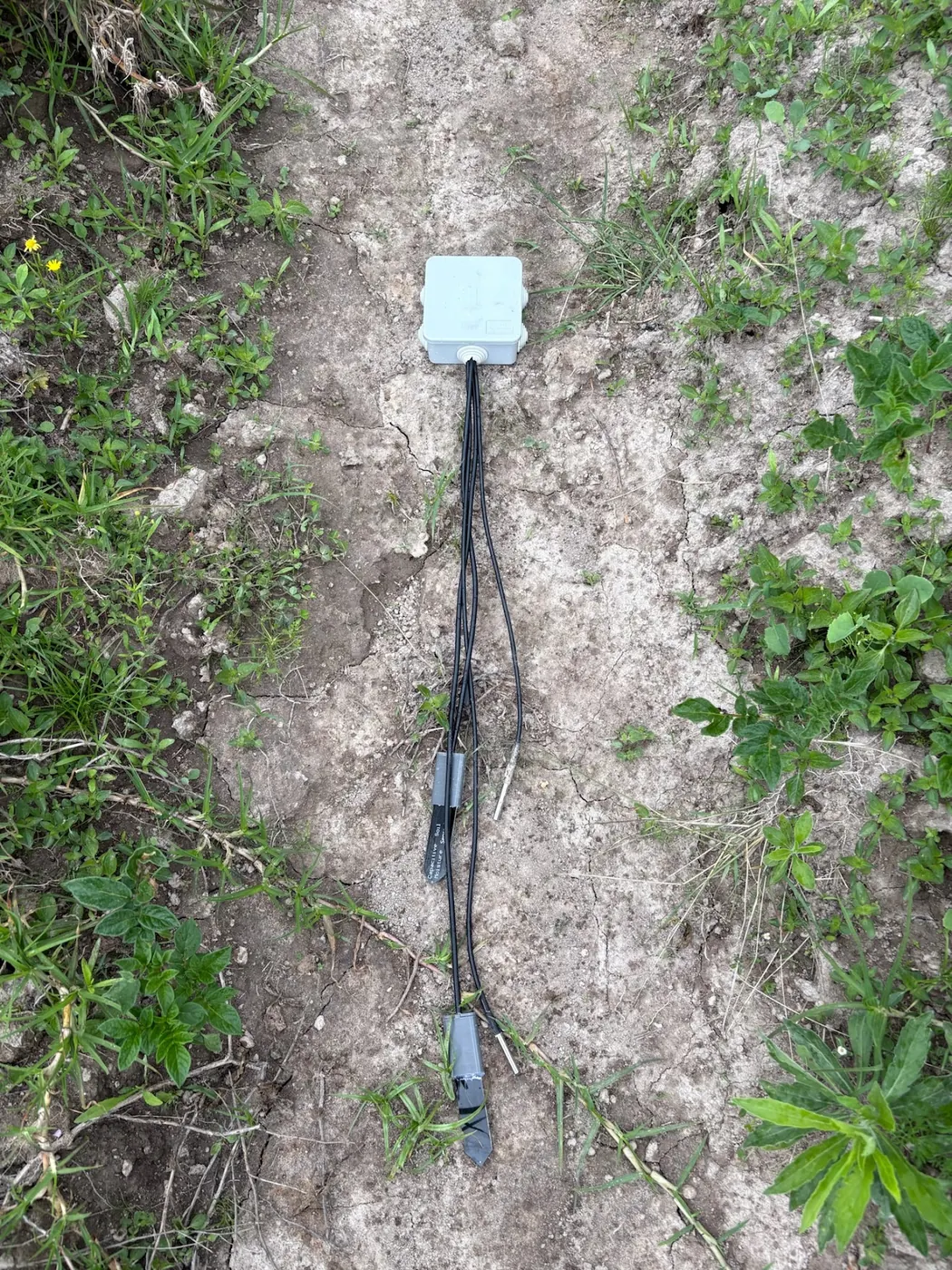
Measured by NuaSense weather stations and soil probes on Kenyan farms, over the period stated with each figure. Past readings, not a forecast.
Three instruments, not one licence
Growers often say "a licence" as though it is one sheet of paper. The Regulations actually describe separate instruments. Part II is headed "Categorization of Operations and Registration of UAS", so the aircraft itself gets registered. Then there is a Remote Aircraft Operators Certificate (ROC), defined as a certificate authorizing an operator to carry out specified UAS operations. And a third instrument, a temporary permit, lets someone import a UAS registered in another country without first deregistering it there.
Each one answers a different question. Is this machine on the Kenyan register? Is this person or company allowed to run these operations? Can a foreign-registered aircraft come into the country for a job? Mix them up and a farm can end up with a registered drone and nobody entitled to fly it commercially, or a contractor with a certificate and an aircraft nobody has checked.
The word "operator" deserves a second look too. The Regulations define an Operator as a person, organization or enterprise engaged in or offering to engage in an aircraft operation. Watch the phrase "offering to engage". A company that advertises drone spraying to neighbours is already inside that definition before the first litre is mixed. A farm flying only over its own land and a service business flying over other people's land are in different positions. The text does not let you pretend otherwise.
One honest gap remains. The sources cited here do not name a standalone "spraying permit". They cover registration, the ROC, the temporary import permit and the categorisation of operations. If someone sells you a spraying permit as a separate product, ask which provision creates it. Spraying is one kind of operation the ROC would have to cover, and this text does not show how the Authority words that. Get the wording from the regulator, not from a salesman's brochure.
The aircraft's registration follows it
The Regulations apply to anyone who imports, exports, tests, owns, operates, procures, assembles, manufactures, modifies or maintains a UAS registered in Kenya, wherever they may be. They also apply to any other such aircraft operating in Kenya. Read that twice. Compliance turns on where the flight happens, and on whose register the aircraft sits. A Kenyan-registered machine carries the rules with it, including to a job across a border.
For a farm, several practical consequences follow. First, a drone bought online and carried home is not exempt because it was cheap or because the field is private. That verb list is long on purpose: importing, owning, procuring and maintaining all count. Second, assembling or modifying a machine, which hobbyists and some local technicians do, is a regulated activity in its own right, not a loophole around buying a finished product. Before swapping a spray tank, a camera or a flight controller on a registered machine, a farm should ask whether that counts as modification.
Third on the list is maintenance. If a workshop fixes drones for farmers, it falls under the same net as the farmer who owns the drone. When you hire a repairer, ask who backs the work.
State aircraft and unmanned free balloons and airships are expressly left out of the Regulations. None of them is a farm tool, so do not try to use that exemption. The definition of "resident" also matters: it means a person who holds a residence permit under the Kenya Citizenship and Immigration Act, 2011. Where the Regulations separate residents from others, a foreign-owned farm company or an expatriate manager should work out which side they are on before applying, not just assume. The text we have does not tell us what follows from that distinction, so ask.
What the Authority weighs before it says yes
The text shows no fee, but it does show the decision criteria. Before it registers a UAS or issues any authorization, licence or permit, the Authority has to weigh national security and Kenya's international and regional treaty obligations, the risk to public interest and safety, what the UAS will be used for, and whether the applicant is under administrative investigation by the Authority.
Use that as your prep checklist. The first two items belong to the regulator, and no grower can argue with them. The third is where you have the most control. "Proposed use" means a vague application ("farm work") is weaker than one that spells out what you will fly, over which land, and what it will do. Put it plainly: mapping a block, or spraying a named crop area, with the owner's consent. Say how often. Say who will hold the controller.
The fourth item is easy to miss. If an applicant is under administrative investigation by the Authority, the regulator is told to weigh that before registering or authorizing anything. If your company has an open matter with the regulator over anything aviation-related, clear it first. It is also one more reason to keep every earlier Authority letter where you can find it: on paper and as a photo on your phone.
Notice what the list leaves out: crop type, farm size, yield. The regulator is not deciding whether a drone makes agronomic sense on your farm. That call stays with you, and the later sections deal with it.
The Regulatory Impact Assessment on the transport ministry site%20Regulations%202024(2).pdf) gives one more piece of background. It says the Authority exists to plan, develop and manage civil aviation economically and efficiently, and to regulate and operate a safe system. It also says the revised regulations are designed to comply with ICAO standards and recommended practices. Safety first, then efficiency. Expect questions to be framed that way.
Line of sight decides how big a block you can work
Three kinds of operation are set out in the Regulations. In Visual Line-of-Sight flying, the pilot keeps the aircraft in view. In Extended Visual Line-of-Sight, the remote pilot in command depends on one or more remote observers. Those observers keep the aircraft in visual sight at all times and pass critical flight information by radio. In Beyond Visual Line-of-Sight, neither the remote pilot nor the observer can keep direct, unaided visual contact with the aircraft.
On a big block, this is the clause that gets you. If you can't see the drone from one spot where you're standing, you're either working with observers (people on radios who keep the aircraft in sight the whole time) or you're beyond line of sight, which is a separate kind of operation. The cited text doesn't spell out what approval each category requires. Before you pick a machine, ask the Authority which category your planned flight falls under. That answer can change the entire cost of the job.
Think about what an observer really needs. Someone has to stand in a place where they can see the aircraft, hold a radio, and relay critical flight information. On a farm, that means a second person who is trained, there for the entire flight, and not pulled away by another job. The labour is small next to a spray crew, but it's not zero. You have to plan for it.
The practical way to read it: a compact farm where one person can stand and see the whole job is the easy case. A sprawling estate with tree lines, slopes and hedges is not. A drone that flies far does you no good if the law calls the flight beyond line of sight and you have no approval for it. Range on the spec sheet is a physical number. Range in law is whatever you can legally see.
Privacy and liability sit inside the legal text
Two definitions matter to anyone flying a farm drone with a camera. The Regulations define surveillance as watching a person closely enough to learn their identity, habits, conduct, movements or whereabouts. It also covers watching privately owned real property closely enough to determine unique identifying features or occupancy. A drone mapping your block can easily pick up the neighbour's compound next to it. Plan the flight line, and delete what you don't need.
The definition of an imaging device is wide: still cameras, camcorders, motion picture cameras, and any instrument that can record, store or transmit an image. "Image" covers thermal, infrared, ultraviolet and visible light records. So a thermal or multispectral camera isn't outside the rules just because it doesn't look like a normal photograph. If you hire an operator for mapping, ask what happens to the raw files and who keeps them.
Liability is spelled out as well. An "accident" includes a person being fatally or seriously injured by direct contact with any part of the UAS, and it also includes a building, structure or animal coming into direct contact with any part of it. On a mixed farm, that last clause covers a cow or a farm dog. A low pass over a paddock is a legal event, not just a nuisance. Any spraying done near crop protection products and livestock raises the stakes again, so keep animals clear of the flight area.
The Regulations also define psychoactive substances to include alcohol, opioids, cannabinoids and several other classes, but not coffee and tobacco. Don't let a pilot work a shift after drinking. That's a defined substance in the same text that governs your aircraft, and an accident under the definition above is exactly where it would matter.
How long Kenya spent in regulatory limbo
The FAO e-Agriculture learning activity of 16 to 27 October 2017 promoted a piece titled "Drone regulation in Kenya: about to take-off". The Regulations were gazetted on 3 April 2020. Do the simple subtraction: 16 October 2017 to 16 October 2019 is two years, and another five and a half months brings you to 3 April 2020. The stretch between the "about to" framing and the gazette date is a little over two years and five months.
That is how long the limbo stretched, going by what these sources show. What went on inside the regulator during that time is not in the record we have, and this piece will not guess. One modest lesson stands out: a headline saying a rule is coming is not a rule. Plenty of growers bought machines in that gap. Some may have been flying on assumptions.
The same FAO material names neighbours: Nigeria's UAV airspace, Benin's regulations trailing behind, South Africa's agri-service industry, and a "smooth ride for drone operators in Ghana". Those are 2017 headlines, not a current ranking, and the sources do not say how Kenya compares today. Use them for one thing only: Kenya's burden is not unique. Other countries were wrestling with the same questions, some moving faster than others.
We also cannot say whether the 2020 Regulations have been amended or replaced since. The assessment document on the transport ministry site has 2024 in its file name, which suggests the subject was still being worked on. That is an inference from a file name, nothing more. Before you rely on anything above, check the current version with the Authority.
Enforcement capacity is part of the risk
A World Bank document on drone ecosystem development says law enforcement services need constant trainings to build their awareness of drone airspace safety and current regulations. Read that as a warning about the other side of compliance. The paperwork is one half. The person who checks the paperwork is the other.
If officers are still learning the rules, someone who does not know what a registration or an operator certificate looks like can stop you. Carry the paperwork on the day: the registration record, the certificate, the owner's consent for the land. A calm, complete file is your best protection against a roadside argument. And a contractor who shows up without one is telling you something.
It cuts the other way too. Thin enforcement is not permission. The Authority weighs public safety and national security in every decision, and an unregistered drone that hurts someone is an accident under the definition above, with all the liability that follows. If you buy cover, read the insurance wording against that definition, not against a brochure.
The draft Kenya Agricultural Data, Information and Digital Agriculture Policy says the agricultural policy lines up with the Constitution of Kenya (2010), Kenya Vision 2030, the Fourth Medium Term Plan (2023 to 2027) and the Kenya Agricultural Policy (2021). It is a draft, and the excerpt we hold does not set drone rules. A pro-technology policy is welcome. But it is not aviation permission, and a county officer's encouragement does not replace a certificate.
Buy, hire or skip: the options side by side
No source here gives a drone price or a per-acre spraying rate, so the comparison below lays out what each route costs you in obligations, not shillings. Fill in the money yourself once the Authority and two operators have answered in writing.
- Buy and fly yourself. Obligations: you register the aircraft, you or your company need operator approval, you carry the privacy and accident liability, and you must find and train a pilot and, for some flights, observers. What it buys: control of timing.
- Hire a licensed operator. Obligations: you supply consent for the land and a clear brief. The operator holds the registration and certificate, but ask to see them. What it buys: the legal burden moved to someone whose business it is.
- Use a foreign-registered machine on a contract. Obligations: the temporary import permit exists for this, so ask the operator whether they hold it and do not accept "it is allowed" without sight of the document. What it buys: access to equipment nobody local owns.
- Do nothing. Obligations: none with the Authority. Walk the block, use a knapsack, and keep the money. What it buys: no regulatory exposure at all.
The position here is this: for most single farms, hire or do nothing. Compliance work is the same whether you fly one block or a hundred. It only spreads thinly if you have the acreage or a service business behind the aircraft. The FAO open knowledge material on drones for agriculture says, at the most basic level, that drones give farmers a bird's-eye view of their crops and let them detect subtle changes not readily identified otherwise. That benefit is real. It is not a figure for yield or income, and none of the sources supplies one.
If, after the calls, the answer is "do nothing", that is a decision, not a failure. Spending your first season's attention on a legal file for a machine you fly rarely is a poor trade.
Where a weather station does the job a drone cannot
Some growers reach for a drone when the real question is when conditions are fit to spray. A drone cannot answer that. Take 7 NuaSense weather stations from 4 September to 4 October 2026. Out of 4,817 station-hours, 17 percent scored 60 or better on our spray window index, and 56 percent scored below 30. The index runs 0 to 100 and is computed hourly from the station's own readings.
That was a past period. It says nothing about what comes next, and nothing about your farm in particular, because the stations stand on different farms. What it does show is that good spraying hours can be scarce, whatever carries the nozzle. A spray drone that sits idle waiting for a calm hour has the same problem as a knapsack crew. For how to apply products safely, see NuaSense's guide on applying pesticides in Kenya, which covers choosing the right product and spraying at the right time.
A NuaSense weather station costs KES 30,000, excluding taxes, and gets itself online over a Safaricom SIM or over Wi-Fi where the site has it. Solar powered, so it needs no mains connection. It does not replace a drone and does not do what a drone does. If your question is timing rather than overview, it is simply the cheaper tool, and it needs no certificate from the Kenya Civil Aviation Authority.
If you are weighing several tools, how to work out if farm sensors will pay on your farm sets out the payback arithmetic for sensors against acreage. Apply the same discipline to a drone before you approach the regulator. Write down the decision it would change, and the cost of getting that decision wrong without it.
A short order of work before you spend anything
These are actions you perform, so they are numbered in the order to do them. Most of them cost a phone call.
- Decide the job: mapping, spraying, or checking fences and stock. The Authority weighs proposed use, so be specific.
- Ask the Kenya Civil Aviation Authority in writing for current fees, timelines and which operation category your flight falls in.
- Check whether your intended machine would be registered in Kenya or arrives under a temporary import permit.
- Walk the block and ask whether one person standing in one place can see all of it. If not, ask what observers and radios would add.
- Get two quotes from licensed operators and ask to see their registration and certificate.
- Only then price a purchase.
Steps two and five cost only time. Most farms will stop at five. That is a perfectly good outcome. Keep the written answers you collected along the way. They are your record if a neighbour, an officer or an insurer ever asks what you checked and when.