A bag of maize reaches the store on the day someone judges it dry enough. On many Kenyan farms, that judgement comes from biting a kernel or from looking at the calendar. A grain moisture meter gives you a number in place of that bite. But the number comes out of a chain of physical steps, and each step can go wrong by an amount someone has measured. This piece goes through the chain a step at a time, giving the figure that rules each step, and it closes with how the chain breaks.
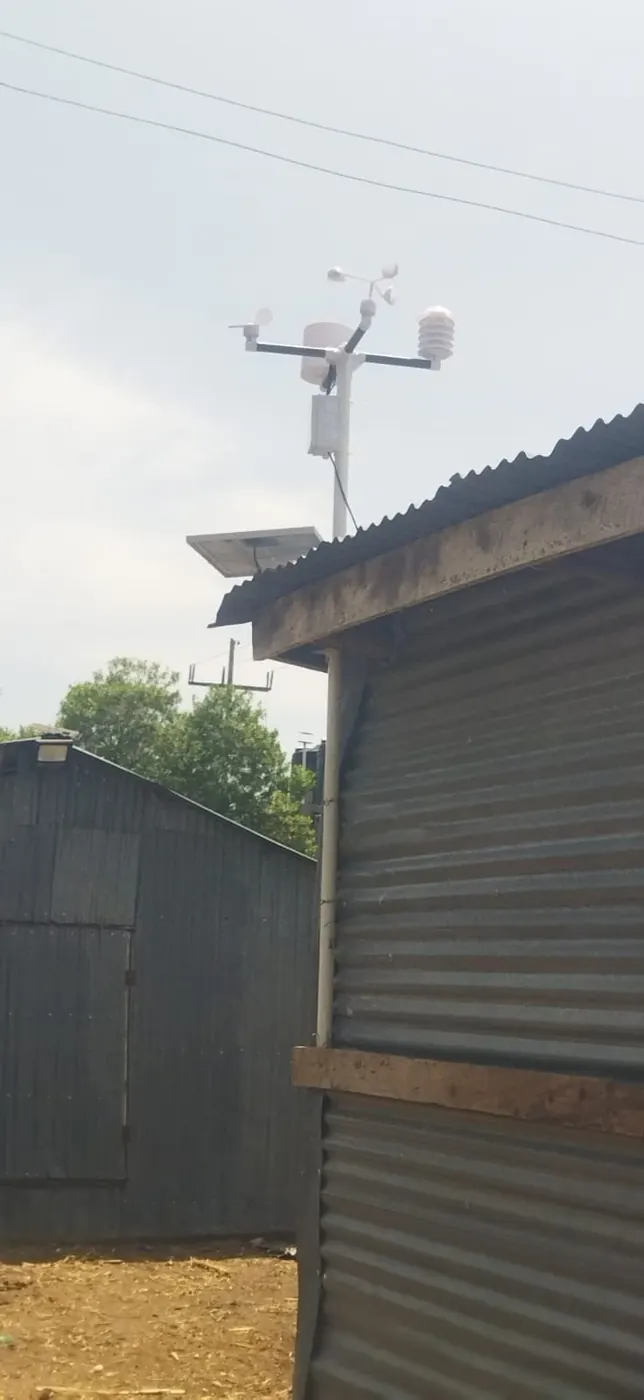
The kernel leaves the cob wetter than the meter can read
Begin with the grain. The One Acre Fund introduction to East African smallholder agriculture gives mature maize at harvest as 25 to 30 percent moisture. That is what the kernel is like on the day a grower decides whether to cut, whether to leave the cobs standing a while longer, or whether the crib will take them as they are.
Now set that beside the instrument. The Purdue Extension fact sheet on grain moisture testers warns that many testers are not very accurate above 22 to 24 percent moisture unless they are specifically calibrated for wet grain. It also says that adding 3 to 4 percentage points to the reading may be necessary. Put the two findings together and the problem is clear. The window where a grower most wants a number, the wet weeks between cutting and storage, is the window where an ordinary meter is least trustworthy. A reading of 24 on freshly shelled grain could stand for 27 or 28 once the correction is applied, and the meter will not tell you which.
This does not make the meter useless. Early readings tell you the grain is still too wet, and that is useful even when the digits are soft. Late readings, taken once the grain has dried toward the range the meter was calibrated for, are the ones you act on. Everything below is about getting that late reading right. The evidence for each step comes from American extension work and a 2024 wheat study. Moving it to a Kenyan crib or a lined bag is reasoned here, not measured. Where the sources run out, that is stated plainly.
What the meter measures is electricity, and water is inferred
A moisture meter never weighs water. The NIST handbook on grain moisture meter test methods and tolerances describes meters as predicting grain moisture from either an optical near-infrared measurement or a dielectric measurement. The handheld units sold through agrovets and online shops in Kenya are of the second kind. They send a small electrical signal through a cup of kernels, or between two pins pushed into the sample, and measure how the grain responds. Water conducts and polarises far more readily than starch and protein do, so a wetter sample changes the signal more. The 2024 wheat study on a pin-based probe for electronic moisture meters adds that these testers work from a set of parameters that includes temperature, fresh and dry weight, and the electrical and biophysical character of the sample. Temperature is on that list for a reason, which the heat section comes to.
Two things follow. First, the electrical reading is only a prediction. Every commercial meter is calibrated against the oven-dry method, ISO 712, in which a sample is weighed, dried and weighed again. The same wheat study reports that an in-house pin probe used with several commercially available meters matched oven drying with an R-squared of 0.73 to 0.94. The gap between 0.73 and 0.94 is the gap between a meter you can act on and one that is roughly right. Second, this is old science. Electrical resistance methods for grain moisture have existed since the beginning of the 19th century, the paper notes. So a cheap unit is using a very old trick with a cheaper circuit around it. The cheapness shows up in the calibration curve and in how the temperature term is handled, never in the principle.
Sampling comes first, and the scoop off the top fails
The costliest error in the chain costs nothing to fix. Purdue is blunt: scooping a can of grain off the top of a load is not adequate sampling. The top of a pile dried fastest in the sun and caught the last shower. Neither is the grain in the middle. The guidance is to probe the load in at least two locations, avoiding the centre and the corners. Better still, sample from the grain as it flows during unloading. For flowing grain the method is mechanical: pass a can across the stream about every 50 bushels, collect into a bucket, mix by emptying the bucket back and forth into a second one, then draw the test sample from that.
Fifty bushels is an American combine-and-truck unit. On a Kenyan farm the nearest thing is the stream of shelled grain coming out of a hired sheller into bags. The transfer works like this: take a handful from every few bags, not from the first one, tip the handfuls together into a basin, pour between two basins until it is mixed, and test from that. The number of bags between handfuls is not in any source, so set it so that you sample the whole lot and not the first part of it. The mixing step is the one people skip, and it is the step that stops one wet pocket or one sun-baked pocket from standing for the whole harvest. A perfect meter reading a bad sample gives a confident wrong answer. Fix the sample before you spend a shilling on the instrument.
A field sample before harvest reads low, and the sources say so
Growers want the number before they cut. Purdue puts it plainly: getting a representative field sample before harvest is difficult, and the moisture content of standing grain is often underestimated. The method Purdue gives is manual. Pick and shell grain by hand from several plants, mix the samples, and take at least three readings for an average. Take several plants, not one, and sample across the field rather than at the edge nearest the path. That underestimate stacks on top of the wet-grain weakness already described. So a pre-harvest reading on maize at 25 to 30 percent is soft twice over: the meter is above its reliable range, and the sample itself tends to read drier than the field.
The wheat paper gives the reason timing matters. Monitoring kernel moisture before grain dries to 30 percent or less cuts the need to spray a desiccant. That removes the risk of chemical residues that lower grain quality and market value. The study used 38 percent moisture as its reference for physiological maturity in wheat. That figure belongs to wheat and should not be carried across to maize. What carries across is the practice: read early and often, not once. The 2023 CGIAR protocol for measuring wheat grain yield puts the meter at the scale. Grain from the net harvest area is weighed on a digital balance and its moisture measured immediately. A sample left in a bag in the sun for an hour is not the same as the one that was picked. Treat the field number as a trend and the shed number as the decision.
Heat: a warm sample reads one to two points low
Now comes the step that catches most people. It is physics, not carelessness. Purdue states that electronic testers underestimate the moisture of hot grain that has not reached equilibrium by at least 1 to 2 percentage points. The reason sits in the electrical principle. Warm water and warm starch act electrically as if drier. The meter's temperature compensation assumes the grain is at one uniform temperature that matches its own sensor. Grain fresh from a drying floor at two in the afternoon is hot in the middle and cooling at the surface. No single compensation value describes that. The meter applies one anyway, and the result lands low. Purdue goes further: even with temperature compensation, meters cannot test grain above 90 degrees Fahrenheit with any accuracy. For a Kenyan reader, 90 minus 32 is 58, and 58 multiplied by 5 and divided by 9 is 32.2, so the limit is about 32 degrees Celsius.
That is a low bar for grain spread on a tarpaulin at midday. Across 17 NuaSense weather stations in Kenya, air temperature between 09 October and 08 November 2026 ranged from 0.0 to 41.6 degrees Celsius. That is air in a shielded instrument, over a past period, across stations that are not co-located. It is not a forecast. Grain in direct sun on a dark surface is generally warmer than the air above it. So the hot-grain condition is not an edge case in Kenya. On a drying day it is the default. The direction of the error is the dangerous part. One to two points low means grain you believe has reached its storage threshold may still be above it. A wet bag gets sealed with a clear conscience.
The sealed bag, and the seventy-dollar box
The fix for hot grain is patience. Purdue is specific about how to spend it. Let the sample cool slowly in a sealed container before testing. Freezer bags are named as suitable. Sealed matters. An open sample cools faster, but it loses moisture to the air while it does so, and the reading drifts the other way. A closed bag lets the kernels and the air inside it reach one temperature and one humidity without exchanging water with the shed. Only then does the meter's compensation describe what is in the cup.
There is a faster option. Purdue describes rapid cooling in an open container or a fan-equipped cooling box. It rates that as less accurate but says it reduces the temperature compensation problem. The box it describes cools a one pound sample within 3 to 5 minutes and costs about 70 dollars to build, with the blower making up about half of that. The 70 dollars is a United States construction cost from an extension publication and is not a Kenyan price; nothing in this bank prices a fan, a box or a meter in shillings. The logic transfers: a computer fan and a wooden box, whatever they cost at the hardware shop in your town, buy a reading a few minutes after shelling instead of after lunch. For a grower testing one harvest, the freezer bag in the shade is the right call and costs almost nothing. For an agrovet or a cooperative store testing every farmer's delivery, the box pays for itself in queue time, and in the arguments it prevents.
Cold grain reads high, for the opposite reason
The second temperature error runs the other way. Purdue reports that cold grain removed from storage on a warm day, or cold samples brought inside during harvest, collect condensed moisture on kernel surfaces. That surface water produces erroneously high readings. The mechanism is the one that wets a cold bottle on a warm afternoon. Air carrying water vapour meets a surface below its dew point, and the vapour becomes liquid. A dielectric meter cannot tell liquid on the kernel from liquid in the kernel. So it reports both.
How often will a Kenyan store meet this? Across 15 NuaSense weather stations over 09 October to 08 November 2026, relative humidity averaged 72 percent and ranged from 19 to 100 percent. The stations sit on different sites and the period is in the past. Early-morning air near saturation, which the upper end of that range describes, is exactly the air that condenses on a sack pulled from a cool store onto a warm loading bay. A highland maize store in the cold hours, opened as the sun comes up, is the Kenyan version of Purdue's winter bin. The fix is the same sealed container used for hot grain. Bag the sample, let it come up to ambient temperature with its own air sealed inside, then test. The two errors look alike on the screen and carry opposite signs. Hot reads low. Cold reads high. If you know which way the sample was moving in temperature when you tested it, you know which direction the number leaned. That alone is worth remembering before you argue with a buyer.
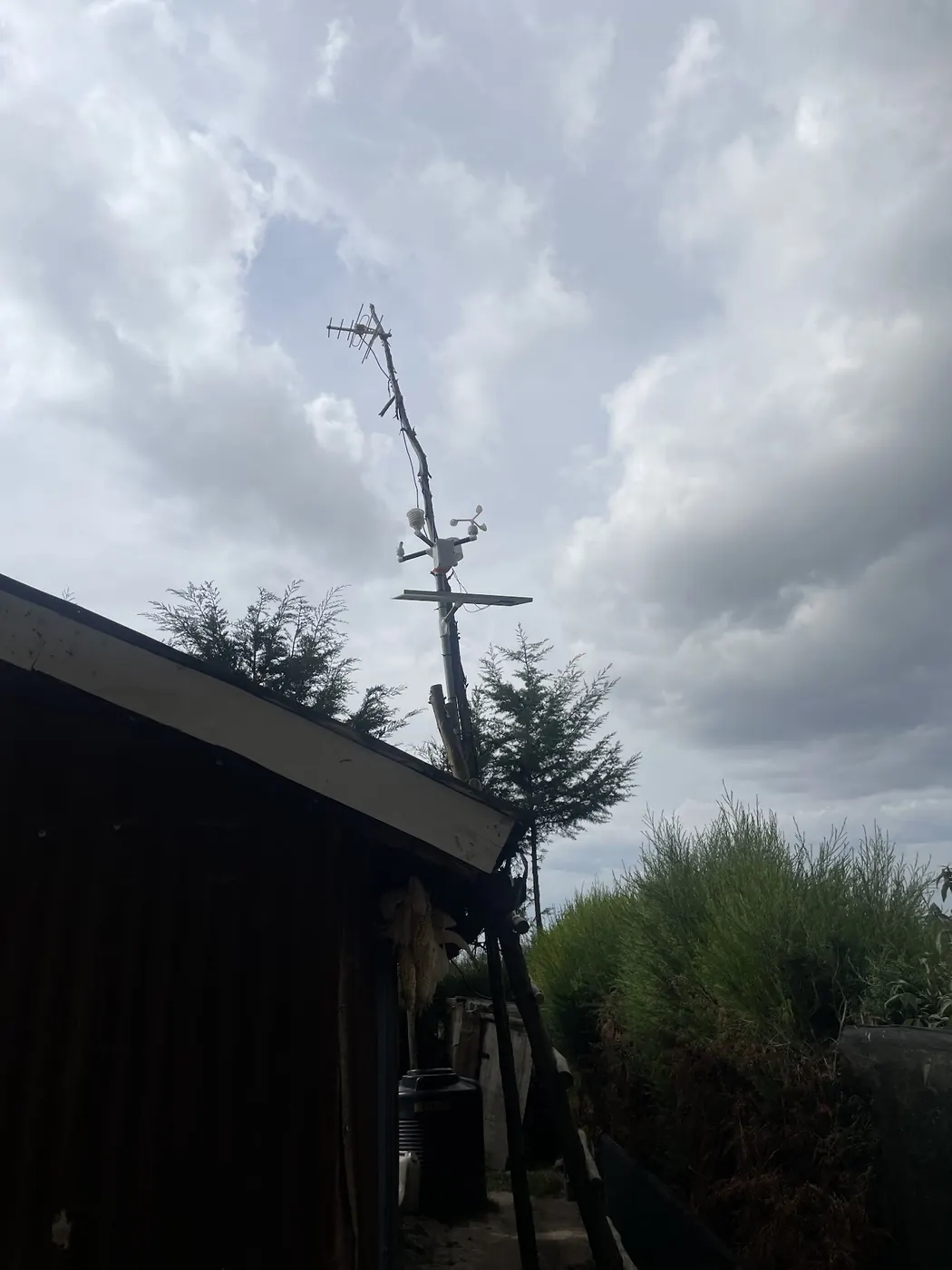
Three readings and a fresh battery
Once the sample is mixed and sitting at ambient temperature, the meter can finally be trusted to do its job. Even then it won't hand you one number. Purdue notes that every moisture tester shows variability when the same sample is tested again and again, and says to use the average of three successive readings. The wheat probe study backs this from the other end: average values varied between the different electronic meters and the oven method, and the gaps were smallest at low kernel moisture, below 50 percent. As the grain dries, the readings converge. Three readings from the same cup, refilled each time, take a minute. Write them down and average them, and keep all three in the notebook. That way a drifting meter shows itself over the season, not at the weighbridge.
The battery is the quiet fault. A low battery gives inaccurate readings, and Purdue's instruction is to replace it at least once a year and pull it out during long idle periods so acid leakage does not wreck the unit. The typical farm meter is used a few weeks a year and then thrown in a drawer with its battery still inside, and the leak turns up at the next harvest when the contacts have corroded. Most single-kernel devices, the wheat study notes, work over a narrow range below 40 percent moisture. That is one more reason a reading taken on very wet grain is a guess dressed as a figure. None of these steps is clever. Each one removes an error bigger than the difference between a cheap meter and a good one.
The pass or fail test you can run at the buyer's counter
Calibrate is a word that hides a procedure. Purdue's procedure is concrete. Check a farm tester against a certified unit using at least three samples at each of two levels, 15 percent and 25 percent moisture. Carry the samples in a sealed container and run both tests within a few hours. Then apply two thresholds. If the difference on any single sample exceeds 1.0 point, or the average difference across the samples at one moisture level exceeds 0.5 points, the tester goes back to the manufacturer for service. Two numbers, and a decision that does not depend on anybody's opinion.
In the American setting the certified unit lives at the grain elevator, inspected and certified on a regular schedule, and most dealers who sell and service testers keep one for calibration checks. No source in this bank names a Kenyan body that certifies grain moisture meters, and nothing here claims that one exists. What a Kenyan grower has is the buyer's meter. The miller, the cooperative store or the trader who will dock the price for wet grain uses a unit whose reading is the one that counts commercially. That is the reference to check against, because a meter that agrees with the buyer's is the meter that ends arguments at the weighbridge. The University of Arkansas tips on checking on-farm grain moisture meters put calibration as important alongside the economic consequences that follow from it. Next time you deliver, carry three sealed samples to the buyer, run both meters on each, and keep the sheet.
The bin reading: depths kept apart, and the number no source gives
Grain already in store needs a different sampling rule. For binned grain, Purdue's instruction is to collect with a probe from various depths, going as deep as possible at the centre and at several other points, and to test the samples separately rather than mixing them. This is the reverse of the harvest rule, where mixing was the point. In a store the aim is to find the wet pocket, and mixing hides it. On a Kenyan farm the bin is usually a stack of bags, a crib or a hermetic bag, and a probe cannot reach into a stack. The honest transfer is to test bags from the bottom, the middle and the outside of the stack as separate samples. The FAO text on the corn sheller and moisture meter notes that because of greater resistance to air circulation in storage, the safe moisture content for storage might differ, without giving the figure in that excerpt.
Which brings the piece to the number the title promises, and that number has to be declared missing. None of the sources in this bank states a safe storage moisture for maize. A figure gets repeated widely, and this article will not print it without a source behind it. The threshold that matters is the one your buyer or your contract applies, and the one your storage type demands, and you should ask for both in writing before the harvest. NuaSense's guide to growing maize in Kenya covers storage alongside varieties by region and costs per acre, and is the place to go for the agronomy side of that question. Damp kernels, the wheat paper reminds, lead to mould, lost end-use quality and a lower market grade, so the direction of the error is the one thing not in doubt.
What a meter costs, and the case for not buying one
No source in this bank prices a grain moisture meter in Kenya, so no shilling figure appears here, and any range quoted elsewhere should be checked against a current quote from an agrovet. What the sources do give you is the cost of being wrong. Purdue links inaccurate readings to spoilage when grain goes into low-temperature drying too wet, to higher combine losses and damage, to drying cost, and to moisture discounts when grain is sold too wet. The FAO sheller text adds that cylinder loss in maize shelling rises with kernel moisture, and that cob moisture is a poorer guide to that loss than kernel moisture is, so the reading also decides when to shell.
Set all that against the purchase. A cheap dielectric unit, used with a sealed-bag sample, three readings, a fresh battery and a check against the buyer's meter, takes out most of the error that matters. A dearer unit buys a better calibration curve and better temperature handling, and the wheat study's R-squared spread of 0.73 to 0.94 suggests that difference is real. The AGRIS record on microwave sensing of grain moisture, with density-independent functions at 11 to 18 gigahertz and standard errors of about 0.3 percent in hard red winter wheat, describes a basis for on-line meters in mills, not an instrument a farm can buy. For a grower with a few acres who sells within weeks of harvest to a buyer with a meter, the right call is often no purchase at all: use the buyer's, or the cooperative's, and carry sealed samples. The hire-or-buy arithmetic is the same one that the spray drone piece on cost per acre against a knapsack ran for spraying, and the post on agriculture sensor prices in Kenya lays out what each spending level buys. A meter earns itself when you store for months, sell in lots, or test for other people.
How the reading goes wrong, from the field to the screen
Each step above can fail, and those failures pile up. Here they are in the order they occur, along with the size each source gives them.
- Grain above the calibration range: wetter than 22 to 24 percent, many meters read low and may need 3 to 4 points added. Fresh maize at 25 to 30 percent sits in this zone by default.
- A scoop off the top of the load or bag: no number can be attached to this error, and no meter corrects it.
- Standing grain sampled before harvest: tends to read drier than the field.
- A hot sample: at least 1 to 2 points low, and above about 32 degrees Celsius (Purdue's 90 Fahrenheit) no useful reading at all.
- A cold sample in warm, humid air: condensation on the surface, and the number reads high.
- One reading instead of three: unknown scatter, in either direction.
- A weak battery: inaccurate readings, and a leaked one wrecks the meter.
- Mixed samples from a store: the wet pocket averages away and is found as mould.
- An unchecked meter: a drift beyond 1.0 point on one sample, or 0.5 on average, carried through a whole season without anyone noticing.
Look at which way they go. Wet grain, hot grain and a pre-harvest field sample all drag the number down. Down is the dangerous direction, because it tells you to store when the grain is saying wait. Only condensation pushes it up, and that happens on grain that was already cool and in store. So the meter's errors tend to tell a grower the maize is drier than it really is. That is why the cheap discipline counts for more than the expensive instrument. A freezer bag, a basin for mixing, a notebook for three readings, a battery changed once a year, and three sealed samples carried to the buyer take care of the biggest errors on the list. Together they cost less than the meter. A meter that has not been through those steps is just a number generator. One that has is the reading you use to decide when to store.