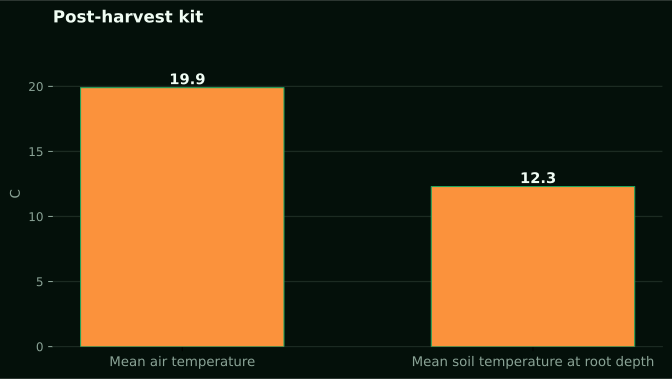
If an agrovet or county project offers you cooling, a solar cold room in Kenya is what you are most likely to get. A charcoal cooler is what you can put up this week. Plain shade sits between them. It costs almost nothing, and for a small daily harvest it is often enough. Which option a given volume of produce justifies is the real question. The evidence is thin, mostly from outside Kenya, and you should read it closely instead of trusting the brochure. Begin with the air around your crates. At 13 NuaSense weather stations in Kenya, from 25 September to 25 October 2026, air temperature averaged 19.9 °C and reached 36.7 °C at the hottest reading. Relative humidity averaged 67 percent and swung from 18 to 100 percent. Those are pooled instrument readings, not a regional claim. Still, they frame the whole decision: Kenyan storage air is often neither hot nor dry, and that is exactly when the cheapest cooling technology does least.
Measured by NuaSense weather stations and soil probes on Kenyan farms, over the period stated with each figure. Past readings, not a forecast.
What each tool actually does to the temperature in the crate
Shade takes the sun off the produce. It does nothing to the air. A crate under a tree or an iron-sheet lean-to still sits at ambient temperature. All you have done is stop direct radiation from landing on top of it. No source in the bank gives a shelf-life number for shade alone, and we will not invent one. Treat shade as the baseline for every other option, and as the only one that needs no water, no panels and no operator.
A charcoal box, a sand-and-brick wall or a khus mat all work as evaporative coolers. They pull heat out of the air by evaporating water. The Frontiers review of passive evaporative coolers for fruit and vegetable storage reports that passive coolers typically reduce product temperature by 3 °C to 10 °C. It also reports that they push relative humidity inside the cooler up to 70 to 100 percent. Treat that as a range, not a promise. Dry, hot air gives you the 10 °C end. Air that is already damp gives you the 3 °C end. Do not expect a charcoal cooler to bring tomatoes anywhere near fridge temperature, and the review itself says to avoid installation where the depression is only a few degrees.
Of the three, only a solar cold room refrigerates. It is a compressor, batteries and panels, and it reaches whatever set point the operator chooses, whatever the outside air is doing. The FAO's note on renewable energy in fish value chains describes solar units in Indonesia's remote islands holding one tonne of fish at minus 2 °C and making ice. It also describes modular solar walk-in rooms in Nigeria with two tonnes of storage for round-the-clock off-grid use. That is a different physical capability. The price is a machine that has to be run, serviced and filled.
Humidity, not heat, decides whether a charcoal cooler earns its water
The physics is simple, and it does not forgive. The Mississippi State University extension note on how evaporative cooling works explains it in pad terms. Every gallon of water evaporated takes 8,700 Btu of sensible heat out of the air and turns it into latent heat in the vapour. Water temperature barely matters. A gallon at 50 °F and one at 90 °F differ by about 3 percent. What matters is whether the air can take more vapour. The same note says the system works well in desert air under 10 percent humidity. It is practically useless when humidity sits at or near 100 percent.
The note then gives a tipping point worked out for American poultry and greenhouse sheds. It transfers because it is about air, not buildings: around 80 °F, which is (80 minus 32) times 5 over 9, or about 26.7 °C. Above that, running the pads pays. Below it, the cooling effect is minimal. At 80 °F in most summer cases, humidity is already around 80 percent, so running pads overnight offers little. For a Kenyan grower, the practical reading is that a charcoal cooler soaked at dusk largely wastes water. The air has cooled on its own, humidity has climbed, and the wall has nothing left to evaporate into.
Now set that against our own readings. A network mean of 19.9 °C sits well under the 26.7 °C threshold. A mean humidity of 67 percent is a long way from desert air. The 36.7 °C maximum shows the hot, dry hours exist, and a cooler will work in them. The 100 percent readings show the hours when it will not. These are pooled station figures, not a map of your shed. A hygrometer, or the humidity channel of a weather station, tells you quickly whether you are at the 10 °C end of the range or the 3 °C end. The Frontiers authors admit that information on where evaporative coolers perform best is scarce. That gap is yours to fill on your own site.
Why the shelf-life numbers you are quoted were measured somewhere cooler
You often hear that evaporative cooling adds days of life to produce. That is true, but sellers drop a condition. The Frontiers review states that for apple, banana, mango and tomato, passive cooling gains roughly 2 to 15 days of postharvest life in temperate climates with ambient temperature at 20 °C and humidity at 50 percent. Earlier work cited in the same review found 2 to 6 days. A separate modelling exercise at 30 km resolution for India, Nigeria and the world found passive evaporative cooling could give up to a 7-day gain for banana.
None of that was measured in Kenya. The 20 °C and 50 percent reference case is not your afternoon in a crate shed. So the honest statement is this: the gain on a Kenyan block falls somewhere in a wide band that depends on your air, and nobody has published a Kenyan table. The part of the review that carries over with the least adjustment is mass loss. Direct passive coolers cut mass loss in tomato, carrots, papaya, orange and amaranth by up to 90 percent against ambient storage. Mass loss is water leaving the produce, and a humid cooler slows that down even when the temperature drop is small. For leafy crops sold by weight and judged on wilt, that may be the number that pays, not the day count.
The review also lists what has been stored this way: coriander and fenugreek leaves, spinach, tomato, green onion, carrot, radish, peas, papaya, sapota, orange, plum and grapes. Look at what is missing. No fish, no meat, no milk. Those products need refrigeration, and a 3 to 10 °C drop below a warm ambient does not get you there. If your product is on that second list, the evaporative cooler is not a cheaper cold room. It is the wrong tool.
Volume is the first sizing question, and it rules out one option fast
The Frontiers review puts the storage range for passive coolers at 0.01 to 10 m³ of fresh produce. Those two ends are different tools, not one design scaled up. At the bottom sits a zeer pot: two clay pots with wet sand between them. At the top sits a sand-and-brick room with a cooling pad on the windward wall. Pads typically run 0.01 to 0.2 m thick, the review notes. That is the dimension you adjust as you build bigger, along with the wall area the wind can reach.
Compare that with the solar rooms FAO describes: two tonnes in the Nigerian walk-in units, one tonne of fish in Indonesia. A tonne of vegetables in crates is a different kind of volume from a zeer pot, and a 10 m³ charcoal room at the top of the passive range is about the space of a small store. So the first question is how many crates come in on your busiest day, and how long they wait. A household's daily harvest, or an agrovet's display stock of leafy vegetables, fits comfortably inside the passive range and is nowhere near the volumes that justify a compressor. A collection point taking a group's harvest before the buyer's lorry arrives is at or past the top of it.
Getting it wrong in either direction costs money. Oversize a charcoal cooler and you get a damp room with slow air moving through a big pad, and the depression drops. Buy a solar room for a daily volume that half-fills it and you are paying to chill empty air. The Frontiers authors list unsatisfactory evaporative cooler performance as a possible cause of farmers' limited adoption; a good share of that is almost certainly coolers built for the wrong air or the wrong volume. Size it to the crates you have, not the crates you hope to have.
What the Kenyan solar cold room pilots look like, and who runs them
Kenya has real installations, and they are instructive for how they are organised. The USDA Climate Hubs account of solar-powered cold storage in Kenya covers two projects run by USDA's Foreign Agricultural Service with North Carolina State University. Two container-style solar units are headed for Orange Fleshed Sweet Potato roots going to Nairobi markets and processors, African Indigenous Vegetables, onions and other crops. KALRO is tasked with running them sustainably, and a company called BARIDI collaborates on operation and maintenance. NCSU also holds USAID Horticulture Innovation Lab funding for a three-year project on African Indigenous Vegetables with emphasis on women and youth, and CIP received a joint grant with FarmWorks from the Kenya Catalytic Job Fund to test a third solar container for sweet potato.
Look at the list of names, not just the hardware. A research institute operates it. A private firm maintains it, a crop programme fills it, and a grant bought it. That is what a solar cold room is in practice: an operator model with a box inside. FAO's Lake Victoria example points the same way. A Comic Relief-funded pilot brought community-owned solar microgrids to six of the poorest fishing communities on the lake, with energy for ice making and small businesses. Community-owned, and ice is one product among several.
If you are a grower weighing a quote, the lesson is that the question is less whether the unit works than who opens it at dawn, who tops up the batteries, who pays when the compressor fails, and whether the produce flow is steady enough to keep it full. The CGIAR working paper on solar-powered cold storage and sustainable food systems found that using cold storage cut the share of food lost, lengthened shelf life and raised the prices received by both market agents and farmers. That is the upside. It came through a facility someone was paid to run.
The agrovet will be offered the cold room, and the reason is not performance
What reaches the counter has a commercial tilt to it. The Frontiers review notes that firms selling cooling go for the more controllable kit, micro-scale solar cool rooms rather than small-scale evaporative coolers, and that there is little economic incentive to make and push small passive coolers at all. A charcoal box is a one-off job for a mason. A solar room brings panels to sell, batteries to replace, a maintenance contract and a warranty. Following the margin is reasonable for the vendor. But it means what you are shown is no verdict on which tool fits your volume.
The same review's literature count shows the shape of practice: postharvest storage is usually done with active direct coolers, about 50 percent, passive direct coolers, about 30 percent, and indirect coolers taking the remaining 20 percent. Passive coolers are a minority in the literature and in the market. The review says plainly that the scientific basis for evaporative devices is limited, with only a few institutes researching them. So the cheaper option carries the thinner evidence. That is uncomfortable. But it argues for building a small one and measuring it before scaling, not for skipping it.
The World Bank's background paper on cold chains in developing economies names solar-powered cold storage as one trend across developing and emerging economies. The FAO's costs and benefits of clean energy report picked solar cold storage and small solar water pumps as the two clean technologies to examine for the Kenyan context. Note that pairing. The economics of a solar pump against diesel, which this site worked through in the five-year running cost comparison, share a shape with the cold room: capital up front, low running cost, and a case that stands or falls on utilisation.
The comparison, laid out as the decision actually runs
The table below is the bank's figures and nothing more. No source gives a purchase price, running cost or payback, so none appears here. Anyone handing you one for a charcoal cooler is estimating from their own materials. That is fine so long as you both know it.
- Shade. Temperature reached: ambient air, with direct sun removed. Humidity: ambient. Volume: anything you can roof. Needs: a roof and nothing else. Evidence for days gained: none quantified in the bank. Right for: a daily harvest sold the same or next day, any produce.
- Charcoal, brick or sand evaporative cooler. Temperature reached: ambient minus 3 to 10 °C, the larger figure only in hot dry air. Humidity: 70 to 100 percent inside. Volume: 0.01 to 10 m³ of produce. Needs: water, wind, dry daytime air, pads allowed to dry out once a day. Evidence: 2 to 15 days gained at 20 °C and 50 percent humidity in temperate work; mass loss cut by up to 90 percent against ambient for tomato, carrot, papaya, orange and amaranth. Right for: leafy vegetables, tomatoes and fruit held a few days, where the afternoon air is hot and dry.
- Solar cold room. Temperature reached: the set point, down to freezing in the Indonesian fish units. Humidity: controlled. Volume: one to two tonnes in the FAO examples. Needs: panels, batteries, a compressor, an operator, a maintenance partner, steady throughput. Evidence: cold storage reduced loss and raised prices for farmers and traders in the CGIAR study. Right for: fish, dairy, meat, or a collection point moving volumes that would overflow a passive room.
Having read the sources rather than the brochures, our position is this. For a single grower or a small agrovet handling vegetables, the right first purchase is a humidity reading and a shade roof, followed by a small evaporative cooler only if the afternoon air turns out to be hot and dry. For a group handling fish or a tonne of produce a day, the cold room is the only tool that does the job. Scrutinise the operating arrangement, not the panel count. The thing to avoid is the middle: a large passive room in damp air, built because the real cooler seemed expensive.
Running the evaporative cooler so it does not disappoint
Most passive coolers that fail do so in operation rather than design. Three habits follow from the sources. First, wet it when the air is hot and dry and leave it alone when the air is cool and damp. The Mississippi note's 80 °F and 80 percent humidity observation says the night is the wrong time. A cooler dripping all night in highland air is cooling nothing while keeping the pad permanently wet. Second, let the pad dry at least once a day. The same extension guidance gives that as the rule for limiting algae and extending pad life. A charcoal wall that never dries goes green and smells, and then the produce does. Third, keep air moving through it. Evaporation needs air exchange, and a sealed box with a wet wall is a damp box.
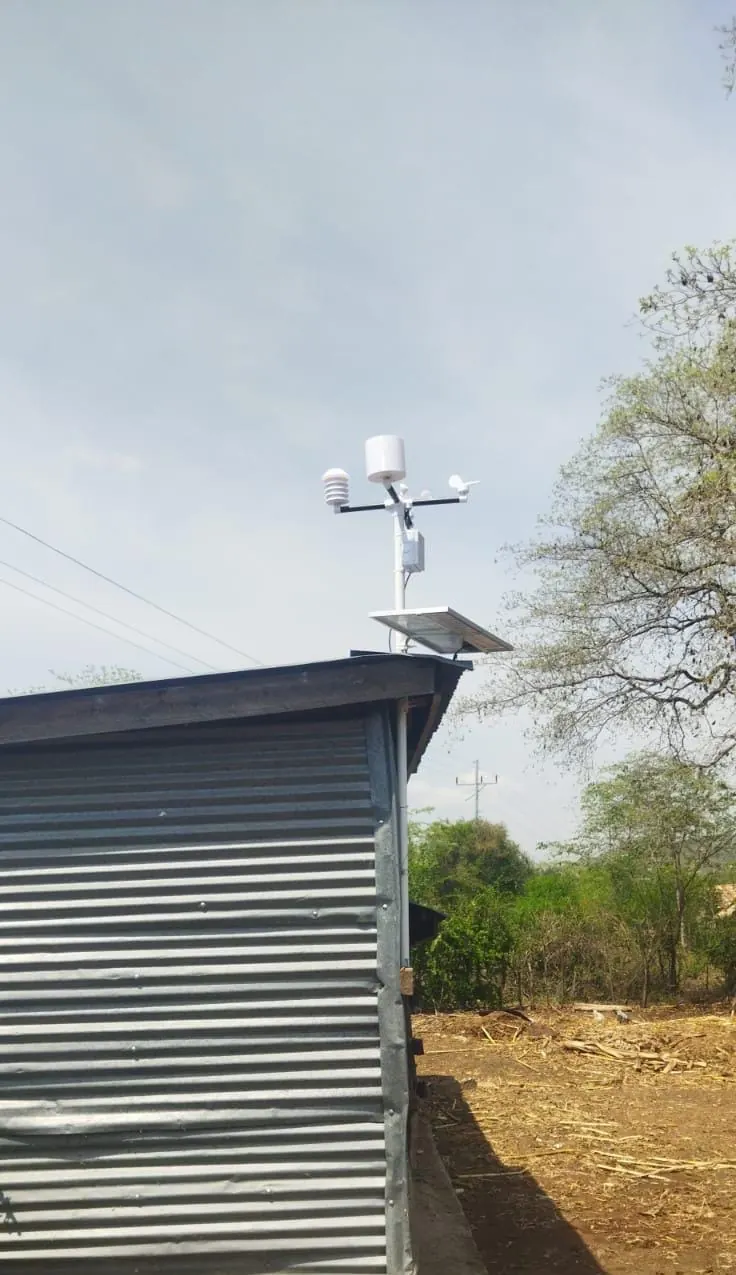
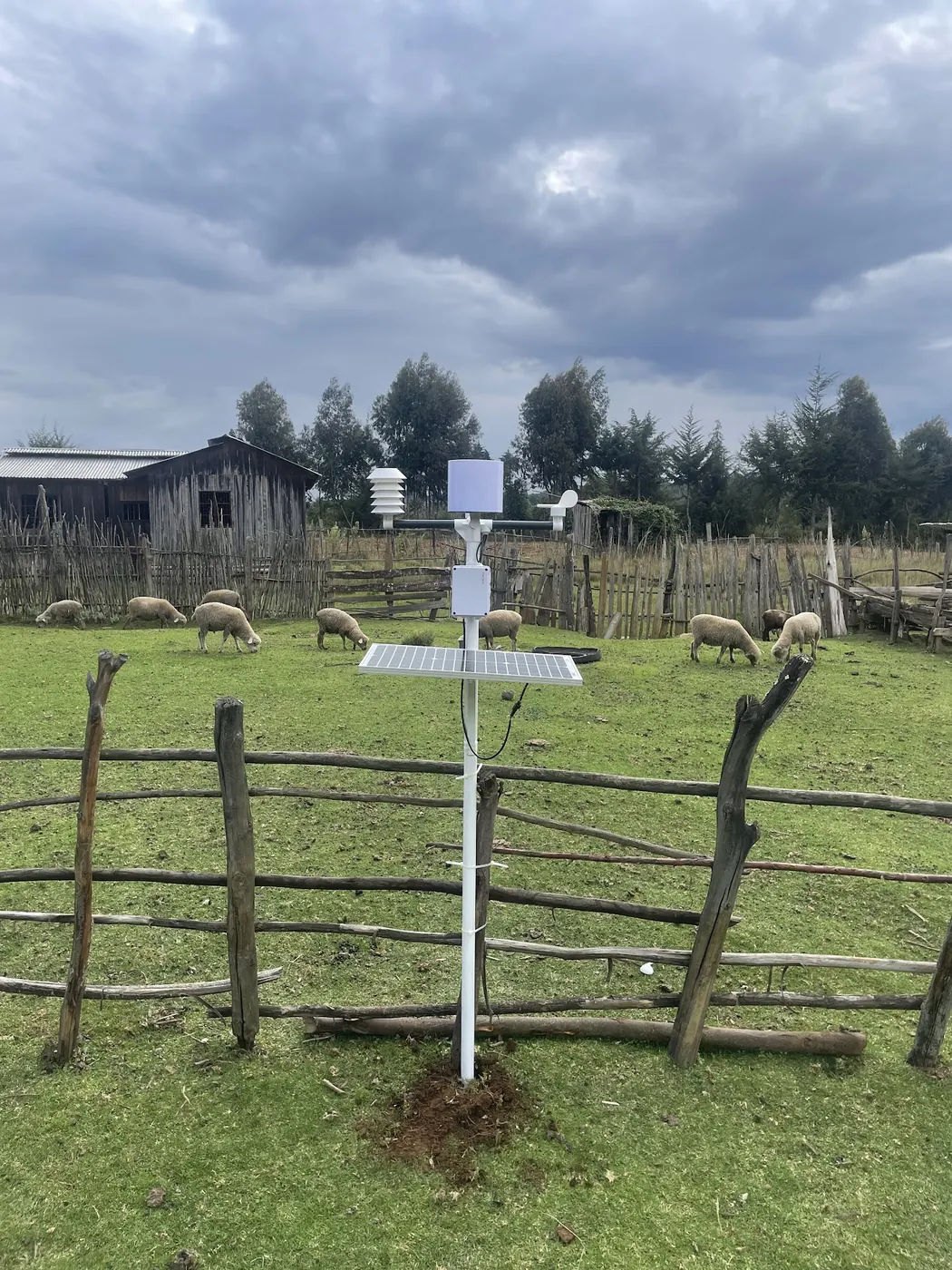
Where the wind comes from matters more than the brick. A wall facing the prevailing afternoon breeze pulls dry air through the pad. One in the lee of the house does not. The direction channel on a weather station, or a strip of cloth on a pole watched over a stretch of afternoons, settles that before the mason starts. This is also where a humidity record earns its place. The NuaSense station reports humidity and air temperature every ten minutes, and a run of those readings tells you how many hours a day your site crosses into the range where evaporation pays. A station costs KES 30,000 excluding taxes. Whether that is worth it for the cooler decision alone depends on what else you would use the record for. A hand hygrometer answers the narrow question. We would rather say that than sell you one for a job a cheaper instrument does. One last point: the cooler stores volume, not weight, so the crates you use set your capacity as much as the walls do.
Buying the solar room: the questions before the quote
If the volumes and the product point to a solar cold room, the hardware is the smaller half of the purchase. Ask who maintains the compressor and how far away they are. Ask what happens after a run of cloudy days. Batteries are sized to a number of hours of autonomy, and that number should be in writing. Ask whether the installer is licensed and who signs off the electrical work. A quote that cannot name an accountable installer is a quote for a box nobody stands behind. Ask what the warranty covers and who ships the part.
Now ask the hard question about utilisation. The Kenyan pilots pair the box with a crop programme that guarantees throughput, and the Lake Victoria microgrids sell ice and power to other businesses, so the panels keep earning when the fish are not there. A single grower with no steady flow of produce is exactly the case the World Bank paper warns about when it frames cold chains as a structural challenge rather than a hardware one. And the IWMI note on solar agriculture capacity in East Africa reminds us that the regional push is about building skills and operators around solar farm equipment, not just handing out units.
Monitoring is a small angle, but a real one. A cold room with a door left open, or a battery sagging in the small hours, can spoil a tonne without a sound. Log the temperature inside the room and set an alert for when it climbs. That is the cheapest insurance you can put on the most expensive option, and it is the same kind of tool this site covered when it set out what IoT sensors are already doing on Kenyan farms, a post that walks through affordable sensor hardware and phone-based platforms for smallholders. A generator burns fuel for every hour the room runs. That is one more reason the solar room is the one you will be shown.
When the cheaper option, or no purchase, is the right answer
Put it plainly: many growers reading this should buy nothing. If your harvest leaves the farm the day it is picked, shade and a quick turnaround beat any cooler, because the produce is the buyer's problem before any storage gain could show. If your afternoon air is damp, and a 67 percent network mean suggests many sites are for much of the day, a charcoal cooler will sit at the 3 °C end of its range. The Frontiers authors' own advice is not to install one where the depression is only a few degrees. Measure first. A short run of humidity readings costs less than a wall of bricks.
Go for the evaporative cooler when the product is a vegetable or fruit, the volume is a few crates to a small room, the afternoon air is hot and dry, and the alternative is a day or two of wilt before the buyer arrives. Build it small. Run it in the day, dry it once a day, and watch the mass loss on your own scales across a season of harvests. That is the only Kenyan table that exists for your site, and you will have written it.
The solar cold room is the right call when the product needs real refrigeration or the volume runs to tonnes, and only when someone is paid to run it and the flow keeps it full. The CGIAR evidence that cold storage lifted prices for farmers and traders is real, and so is the list of institutions it took to operate the Kenyan containers. Spending on tools follows the same logic across this site, whether it is a spray drone against a knapsack or a compressor against a wet wall: the tool earns its cost only at the volume it was built for. Below that volume the cheap thing wins, and sometimes the cheap thing is a roof.