Measured by NuaSense weather stations and soil probes on Kenyan farms, over the period stated with each figure. Past readings, not a forecast.
Two quotes, one borehole
A Kenyan grower who prices a solar water pump often sees a quote that looks wrong beside the diesel one. Panels, controller, mounting frame and pump add up to a figure that a small diesel set beats easily. The diesel quote tells the truth about the day you buy. It says nothing about every day after. The Stanford comparison of diesel and solar pumping costs describes the two technologies as mirror images: diesel pumps typically carry a lower first cost but a very high operation and maintenance cost, while solar carries a high first cost and a low running cost. That is the whole argument in one sentence. It is also why you cannot compare the two quotes at the counter.
The honest comparison is a bill for five years. Start with what you pay on day one. Add fuel, oil and filters for diesel, or nothing much for solar, on every irrigation day. Then add repairs, downtime and theft. This piece gives no shilling figures for either pump. The evidence it draws on has no Kenyan price series, and a made-up range would be worse than none. What the evidence does give is ratios: how much more solar costs up front, how much less it costs to run, and after how many years the two lines crossed where someone measured it. You bring your own two quotes. The ratios tell you what to do with them.
The only five-year head-to-head anywhere, and it was not run in Kenya
One clean five-year comparison in the research comes from a review of solar-powered water solutions for irrigation published in Frontiers in Sustainable Food Systems. It cites a study of rice growing in an off-grid area of northern Iran. There, the solar irrigation system cost 2.14 times as much up front as the conventional pump, and its operating and maintenance expenses were 8.7 times less. The same review also cites Hossain and colleagues. In 2015 they compared solar and diesel irrigation systems of the same capacity and found the solar system had made more money than the diesel one after five years of use.
Slow down on those three numbers. They are the spine of the decision. Twice the price up front. Less than an eighth of the running cost. Ahead on money after five years. Everything a Kenyan dealer tells you about solar is a looser version of those findings.
Now look at where those results were measured. Rice in northern Iran is a flooded crop with long pumping hours. That flatters any technology with a low cost per hour. A comparison of same-capacity systems says nothing about what happens when the solar pump is undersized for the head. That is the commonest way an installation goes wrong. And none of this was done on a Rift Valley borehole or a river lift off the Tana or the Nzoia, at a Kenyan diesel price, with a Kenyan mechanic's call-out fee.
To settle the question for Kenya, you would need the same trial run here. Two pumps of matched capacity on the same lift, the same crop and the same hours. Fuel logged at the pump. Every repair receipt kept for five years. Nobody has published that. Until someone does, the Iranian and Bangladeshi results are the best evidence available. The honest way to use them is as ratios applied to your own quotes, never as a promise.
Putting the ratios on your own two quotes
Here is the arithmetic. It uses no shillings because you will supply those. Call the diesel pump quote D and the solar quote S. If your dealer's numbers land anywhere near the Iranian ratio, S is about 2.14 times D. The extra you pay on day one is S minus D, which is 1.14 times D. Call your honest yearly diesel running cost M: fuel, oil, filters, the mechanic, and trips to town for parts. If solar runs at one 8.7th of that, the solar yearly cost is 0.115 times M. The yearly saving is M minus 0.115 M, which is 0.885 M.
Payback in years is the extra outlay divided by the yearly saving: 1.14 D divided by 0.885 M. If your yearly diesel bill M is about the same as the diesel pump's price D, that comes to 1.14 divided by 0.885, or roughly 1.3 years. If M is only a fifth of D, because you pump a few weeks a season, the same sum gives about 6.4 years. Then solar has not paid back inside the five-year window at all.
The second case is the one to watch. The whole solar argument rests on M being large, which means hours. A grower who irrigates every day through the dry season from a shallow well is the Iranian rice farmer in different clothes. A grower who runs a diesel set for a few weeks to pull a crop through a dry spell at flowering is not, and he should keep the diesel. Everything else in this article is a correction to that one sum. Sizing, theft and cloud push the solar line up. Fuel price risk pushes the diesel line up. And the aquifer pays for whatever the sum leaves out.
The comparison, line by line, from the evidence rather than a brochure:
- Purchase: solar high, diesel low. Iranian study cited by the Frontiers review: solar outlay 2.14 times the conventional pump.
- Fuel: solar none, diesel the biggest recurring line. Nigerian projects cited in the same review cut fuel expenses by more than 60 percent after switching.
- Maintenance: solar low but not zero (controllers, cables, cleaning), diesel high. Iranian study: solar operation and maintenance 8.7 times cheaper.
- Downtime: diesel stops on breakdown and on an empty tank, solar stops under heavy cloud and at night unless you store water in a tank.
- Theft: panels and pumps named as a theft target in Nigeria because used parts resell. Diesel sets are stolen too, but a panel array is harder to hide.
- Five-year outcome where measured: solar ahead on money (Hossain et al. 2015, matched capacity, cited in the Frontiers review). Not measured in Kenya.
Diesel is the line you cannot fix
With a solar pump, almost the whole cost is paid on the first day, and you know what it is. With diesel, most of the cost comes later. That price is set through the Energy and Petroleum Regulatory Authority's pump-price reviews, by the shilling against the dollar, and by whatever happens at Mombasa. The reduced VAT rate on fuel in Kenya was due to lapse in October 2026. Any agronomist who tells you what diesel will cost in 2029 is guessing. That uncertainty is a cost in itself, and it sits entirely on the diesel side of the ledger.
The African evidence is consistent about direction. The World Bank's account of solar pumps on Niger's farms quotes farmer Idé Sanda of Winditane. He had used diesel motor pumps before buying two solar pumps in 2018, and said production had been low compared with the investment. Smallholders in Nigeria who switched from diesel generators to solar irrigation cut operating costs by more than 60 percent while improving water stability through the dry season, according to the Frontiers review already cited. Note the second half of that finding. Stability as well as saving. A pump that stops because the fuel ran out in a dry stretch has cost you a crop stage, and that loss never shows up in a cost-per-litre table. Farmer Jambo of Bora district near Meki in Ethiopia told IWMI that the diesel pumps they used before incurred high running and maintenance costs. Every filter, every mechanic and every spare part fetched from town is a day the pump does not run.
Sizing
The Frontiers review lists four barriers to solar pumping in Nigeria: the high cost of panels and pumps, bad project design through incorrect sizing, a lack of local technical expertise for maintenance, and equipment theft because used parts are valuable. Price is only one of them. Sizing gets its own line, and it deserves it. An undersized solar pump is the failure that makes a farmer swear off the technology for good. The panel is fine. The pump is fine. And the water still does not reach the top of the field at noon.
The review gives a worked example from the Karshi community system in Nigeria. The well had a dynamic water level of 9.7 metres and a total dynamic head of 15.7 metres at a flow rate of 2.4 cubic metres per hour, and that combination needed a 258 watt pump. Three things in that sentence matter to a Kenyan buyer. The dynamic level is where the water sits while you pump, not at rest; a borehole drawn down hard sits well below its static level. The total dynamic head adds the pipe run and the height of the tank or the top of the field. That is why 15.7 metres is six metres more than the water level. And the watts follow from head and flow together, so a dealer who sizes a pump from borehole depth alone has not sized it.
This is a service an agrovet or installer can actually sell. Measure the dynamic level with the pump running, measure the lift to the delivery point, pace the pipe run, settle on the flow you need, and only then pick a pump off the curve. On a river lift the water level moves with the season, so size for the low-river head, not the one you measured after the long rains. A diesel set hides sizing errors because you can rev it. A solar pump does not. That is a real argument for diesel on a lift you have never measured, and a stronger argument for measuring it.
How much land one small solar pump actually waters
The farm sizes in the evidence are small next to a Kenyan commercial block, and that is worth saying plainly. The IWMI report on solar pumps for household micro-irrigation in Ethiopia describes small pumps installed in December 2015 in the Bora and Dugda districts of East Shoa Zone and in Bonke district of Arba Minch Zuria. Each lifted water from 6 metres, discharged 0.5 litres per second and irrigated 2,000 square metres, which is 0.2 hectares. In Niger, Idé Sanda's two pumps let him expand from two to three hectares. Nothing in this evidence tests solar against diesel on a ten-hectare river-lift block.
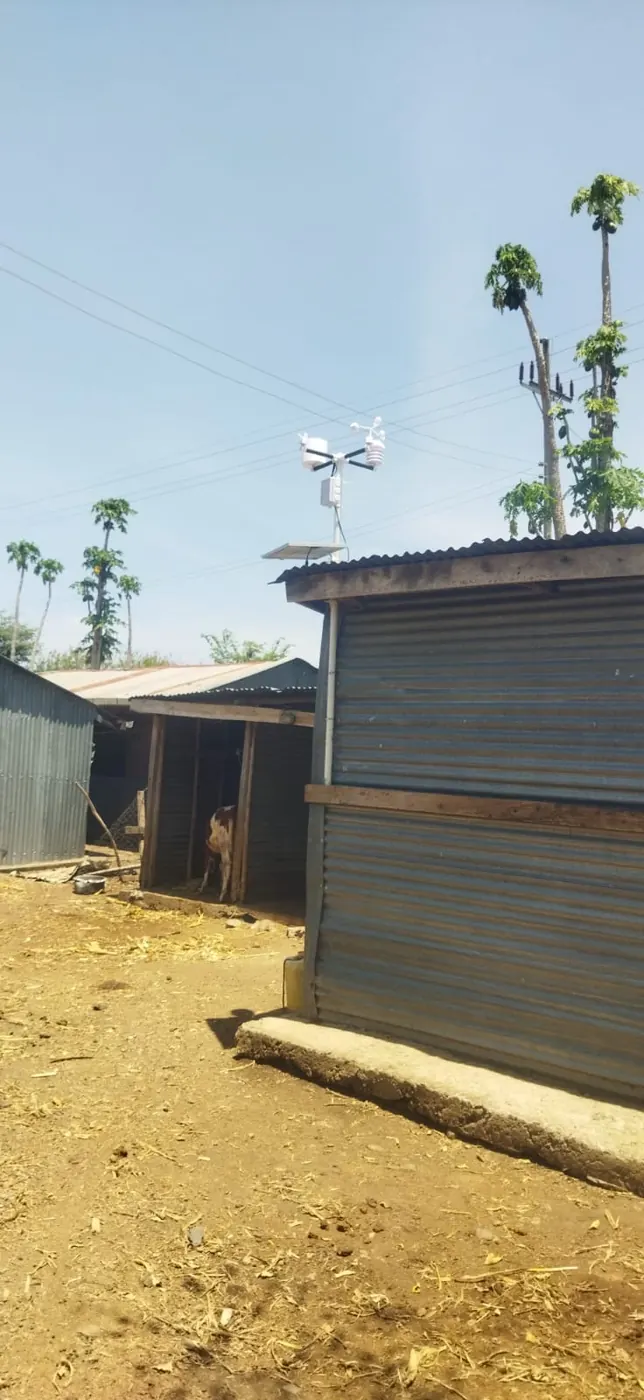
You can check whether 0.5 litres per second covers 0.2 hectares with reference evapotranspiration, which the NuaSense weather stations compute hourly with FAO-56 from their own readings. Across 9 stations over 18 September to 18 October 2026, ET0 averaged 1.7 millimetres per day. One millimetre over one square metre is one litre, so 1.7 millimetres over 2,000 square metres is 3,400 litres. At 0.5 litres per second that is 6,800 seconds, a little under two hours of pumping a day. That is reference ET0, not crop water use, and a hot, windy stretch pushes demand well above the period mean. Still, it shows the Ethiopian sizing is sane for that plot, and it shows the method: daily millimetres, times area, divided by pump flow, gives hours, and hours of sun are what a solar pump has to spare. Scale that to a block of several hectares and the hours no longer fit in a day without a much larger array and a tank, which pushes first cost up faster than the running-cost saving grows. The crossover sits somewhere between the Ethiopian plot and a full commercial lift, and the evidence does not say where.
Theft, cloud and the tank
Equipment theft is on the Nigerian barrier list because used parts fetch money, and no general solar-versus-diesel article prices that in. A panel array at the edge of a field is an asset anyone can see. It has to be fenced, mounted high, bolted with tamper-proof fixings, watched or insured. Each of those is a line the dealer's quote leaves out. A diesel set gets stolen too, but it spends its nights in a store. The same list names a shortage of local technical expertise for maintenance. Solar upkeep is low, not nil. Panels need cleaning after a dusty month, controllers fail, cable joints corrode, and a submersible pump still wears. So ask the dealer who services the installation, how far away they are, and what they charge to come. If the answer is Nairobi and a week, a diesel mechanic in the nearest town may be the better form of uptime.
Then there is cloud. The review says solar pumping is most competitive where insolation is high, and most of Africa qualifies, but a pump with no battery stops when the sun does. Over the same September to October 2026 period, rainfall totals at our stations ran from zero to 75.3 millimetres at different sites. That is a measured spread between stations, not a regional figure. The practical answer is a tank: pump on bright days, store the water, irrigate from the tank on dull ones. The tank is another line on the solar side, and a dealer who leaves it out is sizing for the brochure.
Free water is not free
Two separate sources treat solar's near-zero running cost as a problem rather than a feature. The World Bank publication on groundwater governance and the adoption of solar-powered irrigation notes that because solar pumps have low operating costs they do little to encourage farmers to use water efficiently, and it raises the question of how to balance equitable access against groundwater overdraft. It also observes that where energy is subsidised, the subsidy distorts decisions about exploiting groundwater and accelerates unplanned pumping. The FAO briefing on the benefits and risks of solar-powered irrigation names the Kenya Smallholder Solar Irrigation project as working to accelerate commercial sales of solar pumps to small farmers. So this is a live Kenyan question, not a South Asian one.
Put bluntly, part of the five-year diesel saving is a transfer from the aquifer to your bank account. A diesel pump stops because fuel costs money. A solar pump has no such brake, so the brake has to come from somewhere else. The same World Bank publication describes groundwater decision making in Kenya as sector-based and on the whole ad hoc, with no mechanism for coordination, and as overly centralised, with limited real involvement of catchment area advisory committees and water resources user associations. The draft Policy for the Protection of Groundwater provides for mapping strategic aquifers and identifying groundwater conservation areas. The Water Resources Authority issues the abstraction permit you need for either pump. That permit, not the pump, is the first thing to secure.
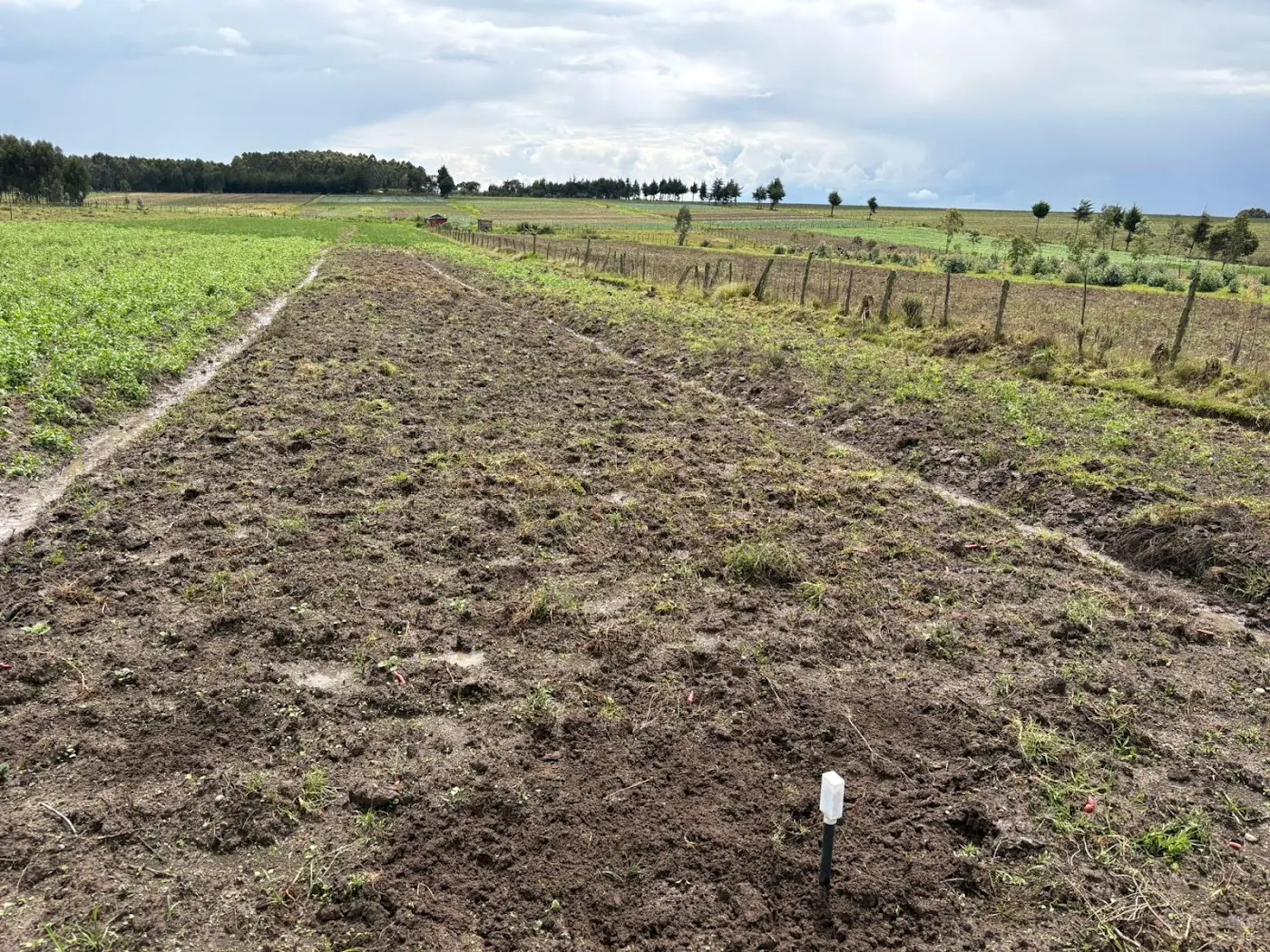
The cheapest brake is a soil probe. A NuaSense soil sensor at KES 7,000 excluding taxes reports relative moisture at a shallow and a deeper depth as percent of sensor scale. A dry trace at the deeper probe says the last pumping did not reach the roots. A wet one says leave the pump off today. The NuaSense piece on IoT applications in Kenyan agriculture covers which low-cost sensors smallholders actually run and how they feed irrigation timing, and our irrigation optimisation page sets out how the probe and the station's ET0 fit together.
Who finances the dealer
The strongest cost number in the evidence is a credit line, and it was lent to retailers rather than farmers. The Niger Solar Electricity Access Project, with 50 million dollars from the International Development Association, extends credit to private companies that sell productive-use appliances such as solar pumps. The World Bank feature already cited reports that NESAP loaned more than 1.5 million dollars to solar importers, wholesalers, retailers, installers and service providers. It also reports that four solar pump companies accounting for half of all pump sales in Niger brought 800 solar pumps to the country's farms between 2017 and the time of writing. Idé Sanda bought his two pumps through that scheme.
Read the mechanism, not the dollar figure. The farmer did not get cheaper money; the dealer did, and the dealer could therefore stock, install and service pumps that would otherwise have sat in a warehouse. Nigeria pulled a different lever and removed import duties on solar components. The follow-on programme, HASKÉ, approved in 2021 at 800 million dollars over ten years, expects about 10,000 rural business owners and farmers to benefit, and the Regional Off-Grid Electrification Project puts 334 million dollars of grants and lending into solar companies across 19 countries.
For a Kenyan buyer this reframes the question from can I afford a pump to does my dealer have working capital and a service obligation. A dealer financed to stock parts and keep a technician on the road is worth paying more for than one selling boxes off a lorry. The CGSpace report on smallholder solar pump irrigation in Ethiopia describes small solar pumps as a way past the energy cost and access constraints that stop farmers irrigating at all. That only holds if someone keeps the pump running after the sale.
When to buy diesel, and when to buy nothing
Take a position. On a plot of a few hectares or less, solar wins, provided the lift has been measured and you have a tank, a fence and a dealer who services the kit. It pumps most days through the dry season. The Iranian ratios and the five-year Bangladeshi result point the same way, and the Nigerian and Nigerien farmers quoted above confirm the direction on African soil. Diesel wins where hours are low. A pump run for a few weeks a year to carry a crop through a dry spell at flowering never racks up enough fuel to repay a solar array. It also wins on a lift nobody has measured, and on a site where the nearest solar technician is a day away.
Buying nothing is right more often than dealers admit. If you already have a diesel set that runs, replacing it early throws away its remaining years; run the payback sum above with the true remaining life. If you have no abstraction permit from the Water Resources Authority, the pump is the wrong purchase order. If the block is below the hours where solar pays, hire a pump by the day. The same per-hour framing that the spray drone piece used against a knapsack applies here: a tool with high fixed cost needs hours, and if you cannot supply the hours, rent them.
One small item tips a marginal case. Farmer Godana Golande of Bonke district uses the power from his solar pump to charge mobile phones as well as irrigate. A panel array produces power whether or not the pump is running, and revenue from charging, a cold store or a water sale to a neighbour is income the diesel set can never earn. No payback formula above counts it, and on a 0.2-hectare plot it may be the difference between solar paying back and not. Get two quotes, measure the head, count the hours, and only then decide.