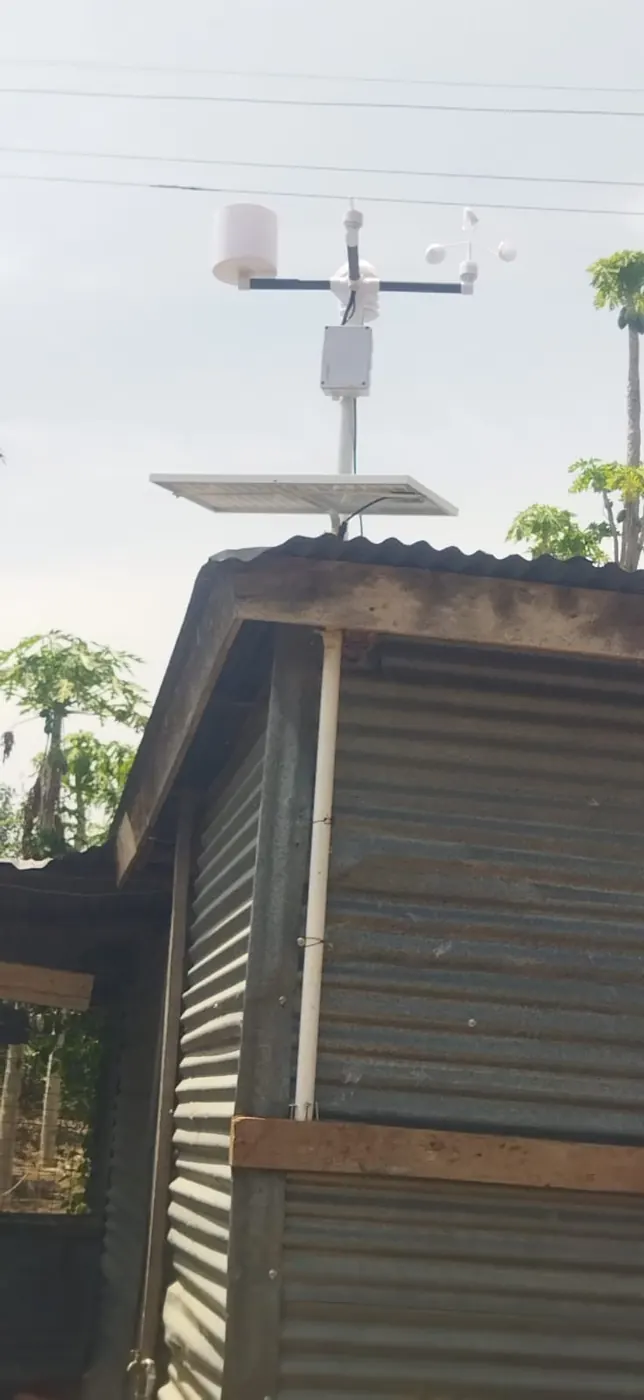
A photo of a maize leaf, sent from the agrovet counter
Every farmer WhatsApp group repeats the same advice: a smartphone is now a virtual agronomist. Any grower in Kenya can photograph a sick leaf, type a question, and act on the answer. The break happens at the agrovet counter. The reply sounds sure of itself. It names a deficiency or a disease, sometimes a product, and the grower is holding a bag before anyone checks whether that diagnosis fits the field. The phone is rarely the problem. A text chatbot was handed a job the research literature gives to other machinery.
Trace that counter failure back and you find four assumptions. The tool can see your crop. It knows your field. The answer has a source behind it. You can afford and obtain what it recommends. Each one is a condition, and you can check each one, mostly for free. This piece takes them in the order a grower on a phone meets them. It ends with the question this site exists to ask: does the tool earn what it costs, and when is the honest answer to pay nothing?
Seeing and reasoning are two different machines
The 2026 Frontiers review from IRRI in New Delhi draws a line between what large language models have been shown to do and what they might do. It notes that many current advances come from multimodal foundation models, computer vision and GeoAI systems, not from standalone LLMs. Plainly: the part that sees a leaf and the part that writes a sentence are different components. Ask the writing part to see and it will still write.
The review's own case studies show that split. The IBM-NASA Prithvi model uses multi-temporal satellite imagery and transformer-based learning for crop monitoring, land-use mapping and environmental assessment. The European Space Agency's WorldCereal initiative applies AI to Sentinel satellite data to make global crop maps for major cereals, maize among them. Neither one is a chatbot. Both are perception systems. They turn pixels into a classification, and then a person or a second system decides what that means for one farm.
The first sorting rule is simple. If a document can answer the question, the chatbot is on home ground: what a label says, what a deficiency generally looks like, what a published recommendation for a region states. If the question needs the tool to look at something, or to know something about your plot you have not typed, you are asking the wrong component. A fluent answer is no evidence that the right one was consulted.
The bottleneck is local knowledge, and the tool does not have yours
The Frontiers review names an interpretation and convergence bottleneck. Remote sensing data arrive as spectral reflectance, backscatter, vegetation indices and derived biophysical parameters. All of it needs agronomic and contextual expertise before it becomes advice. Turning an indicator into a recommendation, the review says, requires knowing crop type, phenological stage (the growth stage the crop is at), soil characteristics, climatic conditions and management history. Read that list again as a grower in Kitale or Mwea. How many of those five did you type into the chat?
Crop type, probably. Stage, maybe, in your own words. Soil, almost never, since most growers do not have a current test and the tool cannot fetch one for a named field. Climate, no. Management history, never: that includes what you applied last season and whether the plot lay fallow. The tool fills those gaps without telling you, from averages, from whatever region it guesses you are in, or from nothing at all. The answer still reads as if it was written for you.
This assumption breaks hardest on Kenyan ground, because the ground changes so much over short distances. The review lists region-specific fine-tuning as an open challenge for LLM-based advisory, alongside data governance and operation where connectivity is poor. A tool fine-tuned on one country's extension bulletins carries that country's soils and rainfall pattern in its reflexes. There is no public figure for how often that goes wrong here, and this piece will not invent one. What a grower can do is give the five items the review lists, every time, in the first message. An answer that was good before you did that is luck. An answer that changes once you add the soil and the stage is the tool telling you how much it was guessing.
Ask where the answer came from before you ask what it says
What separates a chatbot you can buy from a tool actually worth paying for? Whether it looks things up before it writes. The Frontiers review names Retrieval-Augmented Generation and supervised fine-tuning as the methods that matter in agronomy, specifically for cutting the risk of misinterpretation. RAG, once you strip the jargon, means the tool reads documents first and writes from them. Fine-tuning means it got extra training on a curated set of agronomy material from somewhere. Both come down to one question any buyer can put to any vendor: where does this answer come from, and can I see the documents?
A vendor who cannot answer that is selling confidence. A vendor who answers with a list of extension bulletins, trial reports and soil datasets, and can tell you which country and which years they cover, is selling something you can check. The FAO SoilFER programme's description of its decision-support systems sets its transparency standard as transparent methods with documented assumptions and linkages back to the underlying datasets. That is a fair bar to hold a commercial app to. If a public programme can show its workings, a paid one can.
The same standard applies at the counter. A product named in a chatbot answer still has to be registered for that use with the Pest Control Products Board. An agrovet who checks is doing the retrieval step the software skipped. For spray decisions, the crop protection section of this site covers how timing depends on wind, leaf wetness and humidity measured on the farm. That is local context no retrieved document contains.
A one-message test you can run on any chatbot tonight
North Carolina State University's extension service published a prompt for putting agricultural questions to general AI tools. Its use here is as a template, not as agronomy, because every source it names is American. The NC State guidance on AI instructions for agricultural questions says answer quality depends heavily on prompt quality, and that a poorly structured prompt may draw on a mix of reliable and unreliable sources. Their prompt limits the tool to Cooperative Extension publications from land-grant universities and ranks them by proximity (North Carolina first, then neighbouring states, then the wider South, then the Corn Belt). It excludes commercial, industry-sponsored, forum, Reddit, Wikipedia and AI-generated sources, prefers guidance from the last 10 to 15 years unless older work is still widely cited, and asks the tool to explain the agronomic reasons, soil type, climate and management system when regions disagree.
Two instructions in it travel to Kenya unchanged. The first is to tell the tool to say "no Extension source found" rather than substitute something else when it has nothing. The second is to make it label every major recommendation as region-specific or broadly consistent, with a citation and a link. Put both into a message, swap the source hierarchy for what exists here (KALRO publications, county extension material, CGIAR and FAO work done in East Africa, then the wider continent), and send it before your real question.
What you learn is not whether the tool is right. You learn whether it will admit a gap. A tool that never once says it found no source, across a dozen questions about Kenyan soils and varieties, is not sourced, whatever the vendor claims. NC State tested its prompt on three popular tools and found the responses generally reliable but not error-free. It still recommended that a local extension agent or specialist verify any recommendation before a major management decision rests on it. That verdict, from the people who wrote the prompt, is the one to carry. The test costs a few minutes of airtime and it sorts tools faster than any brochure.
How many fields stand behind the recommendation
When a tool does retrieve, the next question is what its sources rest on. For most of Africa the honest answer is thin. The World Bank's report on the promise of artificial intelligence records that iSDA's Virtual Agronomist operates in Ghana, Kenya, Malawi, Rwanda, Tanzania, Uganda and Zambia, and expanded to 200,000 farm plots within its first year. The FAO report of the eleventh soils network meeting describes Jamie Collinson of iSDA-Africa presenting it as AI-supported advisory for smallholders aimed at closing a gap. That 200,000 is the only scale anchor in the material this piece draws on. It means plots enrolled across seven countries, not trials, not yield outcomes, and not a Kenyan share.
Compare how the research programmes describe their evidence. CGIAR's Siyabusa Mkuhlani, in his account of data science for farmer decision support, describes clustering historical yield data from hundreds of farms and experimental sites across Africa to group similar farms before prescribing anything, with gridded soil and weather datasets underneath. SoilFER states that its recommendations are tested through field trials under real farming conditions across seasons, landscapes and crop types. Those are the two shapes of evidence to look for: many farms grouped by similarity, or trials run across seasons. Ask how many Kenyan plots or trials sit behind the fertiliser rate you were just given. If the answer is a continental grid, that is a modelled starting point, the way this site treats its own external soil baselines, and a soil test replaces it.
Weather is the one input you can check against a public source
Weather-based advice is the easiest to check. The Kenya Meteorological Department publishes its forecasts, and the department's own forecast-to-farmer pilot announcement says the pilot has one aim: better forecasts reaching more farmers so they make better-informed decisions. Delivery of forecasts is all the pilot is about, and this piece makes no claim that it involves apps or AI. The point is narrower than that. If a chatbot tells you to hold off planting because rain is coming, you can open the Met Department forecast for your county and check whether the two agree. Soil advice has no public check like that. Weather advice does.
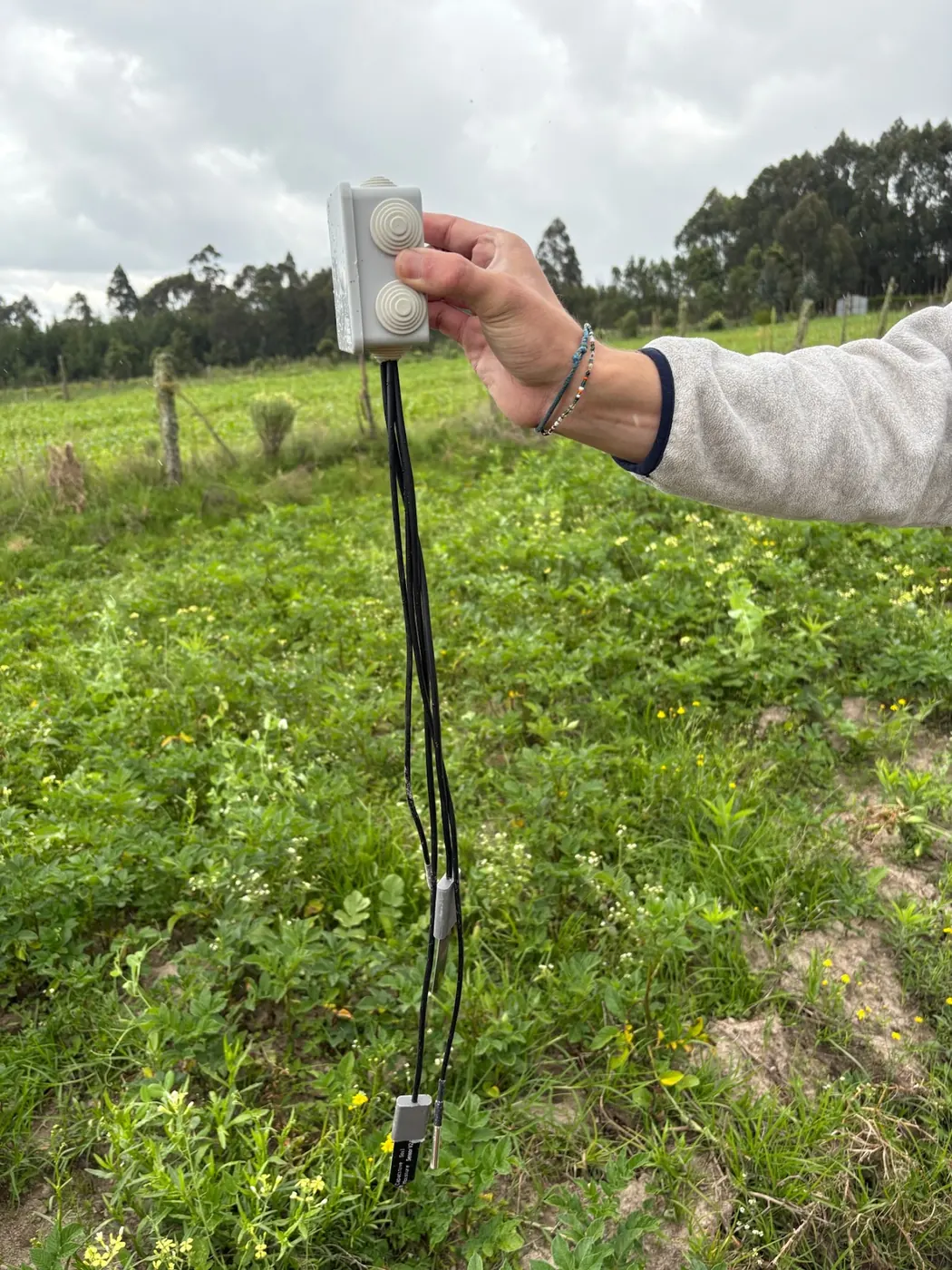
The second thing to audit is whether the tool is talking about your weather or the country's. Our own network shows how much difference that makes. At 10 NuaSense weather stations in Kenya, over 18 September to 18 October 2026, station rainfall totals ranged from 0.0 mm to 75.3 mm. Those stations are not co-located, and the spread is a difference between places, not a regional figure. Reference evapotranspiration, computed hourly from station readings with FAO-56, averaged 1.7 mm per day across 9 stations over the same period. That is reference demand, not crop water use. A tool that says "Kenya had good rain this month" is averaging over a range that ran from nothing to seventy-five millimetres.
Places differ, and so do years. For the grid cells our stations sit in, the CHIRPS satellite-and-gauge record puts the long-term October average at 61 mm over 43 years from 1983 to 2025. The driest October in it was 20 mm in 1996; the wettest was 290 mm in 2019. A generic October planting rule written for the average year is written for a month that is sometimes a third of itself and sometimes nearly five times. So ask the tool which October it means.
A recommendation you cannot buy this season is a wrong answer
The fourth assumption is affordability. Research programmes take it most seriously; commercial chatbots, least. SoilFER states that its recommendations are adapted to what farmers can realistically use and afford, and that it integrates socio-economic analysis so advice is economically viable as well as technically sound. Its target is the right fertiliser in the right place, in the right dose, on the right crop, and it claims even small improvements of that kind can significantly reduce costs. Notice what that claim covers: fertiliser practice, not software. No source in this piece shows that an app itself cuts a bill.
CGIAR's AgWise, as Mkuhlani describes it, pulls together soil analysis, weather and climate data and satellite imagery to generate customised recommendations on variety and on fertiliser rate and placement. The mobile app delivers plant population, planting time, variety and dosage in the farmer's own language. The example user is a farmer in rural Kenya or in Kano, Nigeria, with limited resources and limited access to information. So when a chatbot names a product or a rate, ask whether it was told what you can spend and what the agrovet stocks. If not, the recommendation is the ideal one for an imaginary buyer. The NuaSense piece on raising crop yields in Kenya makes the related case that yield gaps here start with soil and water constraints before seed and tools. That means the cheapest correct action is often not the one a product-naming chatbot leads with.
Offline, in your language, by voice: criteria, not luxuries
Vendors present two features as extras. On the evidence, they are core. The Frontiers review lists operation in low-connectivity environments as a current research challenge, and its representative case studies include voice-based systems, which it reads as a shift from static advisory tools toward dynamic, interactive recommendation. Say your phone drops to one bar at the far end of the field. A tool that needs a live connection answers in town, after the decision was made. Say you prefer Kiswahili or a local language. A text-only tool is a tool used by a relative.
Test both in the shop before paying. Turn off mobile data and ask the tool a question it answered a minute ago. Ask it in Kiswahili. Ask it to read the answer aloud. A tool that handles none of this may still suit a manager at a desk on a flower farm with Wi-Fi, and be worth nothing to a smallholder in Makueni. The same product earns its cost on one farm and fails on the next. The difference is connectivity and literacy, not the model.
Who checks the answer, and what that person costs
The Frontiers review and the NC State guidance both put a human in the loop. The review argues for LLMs as co-pilots assisting people rather than autonomous decision-makers vulnerable to biased output or hallucination, the tool's habit of producing a confident statement with nothing behind it. NC State's closing recommendation is a local extension agent or specialist checking any recommendation before a major decision. Put the two together and the real cost of a cheap or free chatbot becomes visible: it is the time of the person who verifies it. The review itself says that in smallholder systems access to trained extension remains limited and costly. Verification is a cost line, and for most growers in Kenya it is the expensive one.
That changes how you look at the buying decision. One package is a free general chatbot, plus a paid agronomist visit whenever a recommendation matters. Another is a sourced app built for Kenya that shows its documents and admits where it has gaps, plus an agronomist only for calls it flags as uncertain. The second costs more in software and less in checking. Which one is cheaper depends on how many consequential decisions you make per season. A greenhouse manager making spray and feed calls weekly is not in the same position as a maize grower with two big calls a year. This site worked the same arithmetic on spray drones against a knapsack: the per-acre saving only pays once the block is large enough. Here, put agronomist hours where that example put litres.
When is buying nothing the right call? If most of your questions are document questions, a general chatbot with NC State-style instructions can answer them for the cost of airtime. The agrovet and county extension officer are still the check. If your questions need your field's soil and weather, no chatbot has that unless you give it to them. A soil test plus a rain gauge buys the input that makes any advisory worth asking; for a larger block, a station and probes do the same. The review ends with closed-loop systems that learn from field outcomes. That describes a future where the field's own data feed the advice. Until that exists commercially in Kenya, the grower is the loop. Buy the tool that makes that job easier, or buy nothing.